
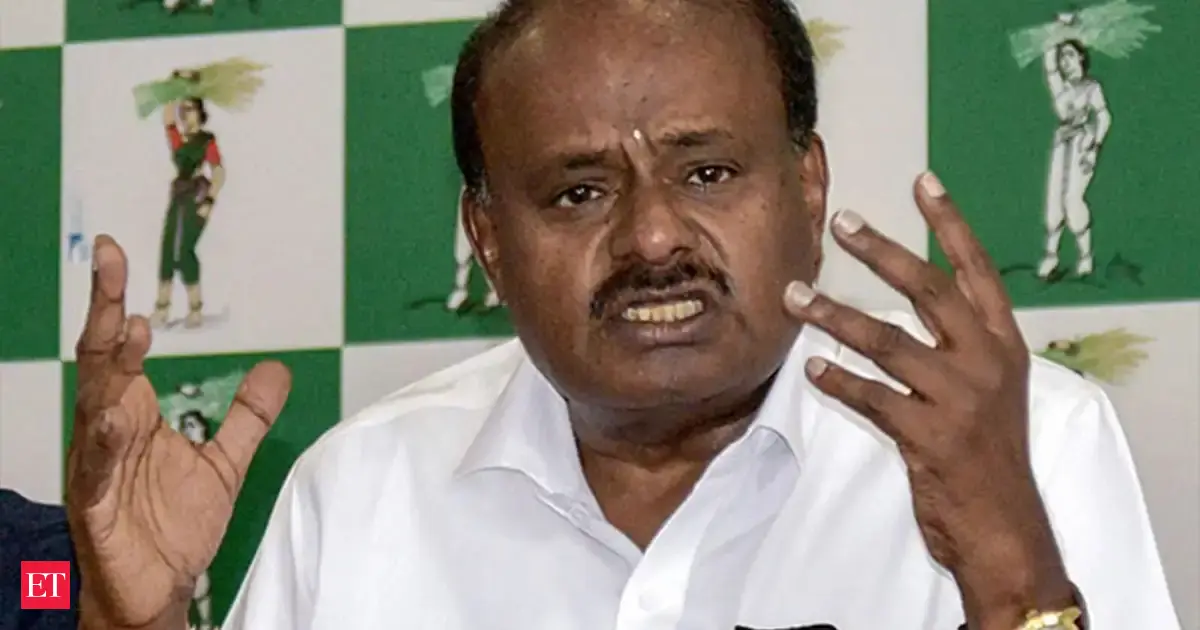
Union Minister H D Kumaraswamy Intensifies Attack on Bidadi Township Project
Union Steel & Heavy Industries Minister H D Kumaraswamy has intensified his attack on the state government's proposed Bidadi township project, challenging Chief Minister DK Shivakumar to visit affected villages and assess the landowners.
Project Lacks Farmers' Consent, Says Kumaraswamy
- Kumaraswamy announced plans for a legal challenge against the final land acquisition notification, citing a lack of farmers' consent.
- He alleged that the project is driven by private interests and that only a small group of vested interests stand to benefit from the development.
- Kumaraswamy claimed that 80-90% of local farmers oppose the project and that fertile agricultural land is being acquired for large-scale real estate development.
Call to Action for Chief Minister Shivakumar
Kumaraswamy has invited Chief Minister Shivakumar to accompany him to the villages in the Bidadi region and interact directly with residents whose lands have been notified for acquisition.
"The truth should be determined by the people whose livelihoods and lands are at stake," he said.
Timing of Final Notification Questioned
Kumaraswamy questioned the timing of the final notification, pointing out that farmers have been protesting the project for more than 470 days.
Accusations of Intimidation
- Kumaraswamy alleged that protesting farmers are facing intimidation, including the filing of police cases.
- He accused members of the government of denying such actions.
Historical Context
Kumaraswamy recalled his tenure as Chief Minister and proposed five townships across Karnataka in 2006, including one at Bidadi, but dropped the proposal after farmers opposed it.
Private Interests at Play
Kumaraswamy accused the present government of reviving the project for reasons driven by private interests rather than public welfare.
Home Minister's Remarks Criticized
Kumaraswamy criticized reported remarks by Home Minister Priyank Kharge that the project would proceed irrespective of opposition and that those aggrieved could seek legal remedies.