
Kerala CM Satheesan has also announced all orders regarding land acquisition for the high-speed rail corridor would be denotified.
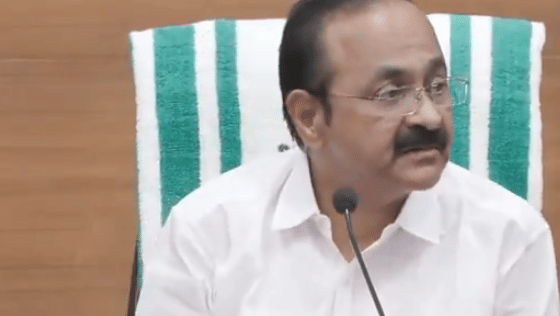
“The project is not happening, and it has been dropped. For years, the public has struggled, unable to sell or buy these lands. The central government too did not give approval, and we had also protested against this project,” Satheesan said.
He said the state’s Home Department would examine the cases registered in connection with the project and recommend to the courts that they be quashed based on their nature. He also said the Revenue Department had been instructed to remove the yellow boundary pegs installed for the project.
Satheesan said the UDF government was not against a high-speed rail corridor, but had opposed the LDF government’s proposal as it was not environmentally sustainable and could have led to an environmental disaster. He added that despite the project being unofficially dropped, the notification remained active.
The project
Though K-Rail was conceived in 2016, the idea of a high-speed rail corridor across the state had been under consideration for a long time. In 2009, the LDF government led by V. S. Achuthanandan had proposed a line connecting Thiruvananthapuram and Mangalore in Karnataka. The project continued under the UDF government led by Oommen Chandy (2011–16), but was later stalled due to land acquisition concerns and financial constraints.
The first Vijayan government (2016–21) revived the project, and the feasibility study was completed in 2019. Soon after the second Vijayan government came to power, land acquisition surveys were initiated.
“The existing railway network and highways in Kerala are not amenable to faster travel due to heavy traffic density, sharp curves, and steep gradients caused by terrain conditions. The average speed of travel by rail and road in the state is about 30 to 40 percent lower than that in neighbouring states,” the Detailed Project Report (DPR) prepared by the Delhi Metro Rail Corporation (DMRC) in 2020 had noted.
As per the document, the project, a joint venture between the Union Ministry of Railways and the Government of Kerala, was a standard-gauge, electrified, semi-high-speed rail corridor running along the length of Kerala, reducing travel time between Thiruvananthapuram and Kasaragod from 12 hours to four, with one stop in each of the 11 districts on the route. Kerala has 14 districts in total.
The 529.45-km corridor was designed to operate at a speed of 200 kmph, with operations proposed to begin in 2025. The total land requirement was estimated at 1,383 hectares, including 185 hectares of existing Southern Railway land and 1,198 hectares of private land.
However, the project faced intense protests over concerns related to land acquisition, displacement, environmental impact, and financial viability. As protests spread across the state, the yellow stones placed by officials as survey markers became symbols of resistance, with many protesters removing, uprooting, or covering them across the State.
Though the government continued to defend the project, the survey process gradually stalled as the Union Railway Ministry did not grant final approval for the DPR, citing “technical grounds.”
In January this year, months ahead of the assembly elections, the Left government announced in-principle approval for a new 583-km Regional Rapid Transit System (RRTS), proposed to be integrated with existing urban metro systems, including the Kochi Metro and the proposed metro projects in Thiruvananthapuram and Kozhikode.
(Edited by Vidhi Bhutra)