
Mumbai’s real estate sector is set to pilot a new proposition that goes beyond location, design and amenities — the air residents breathe. In what is being positioned as a first for the city, developer Superb Realty has partnered deep-tech firm Praan to deploy an AI-powered air purification system across a large-scale development spanning over 1 million sq ft.
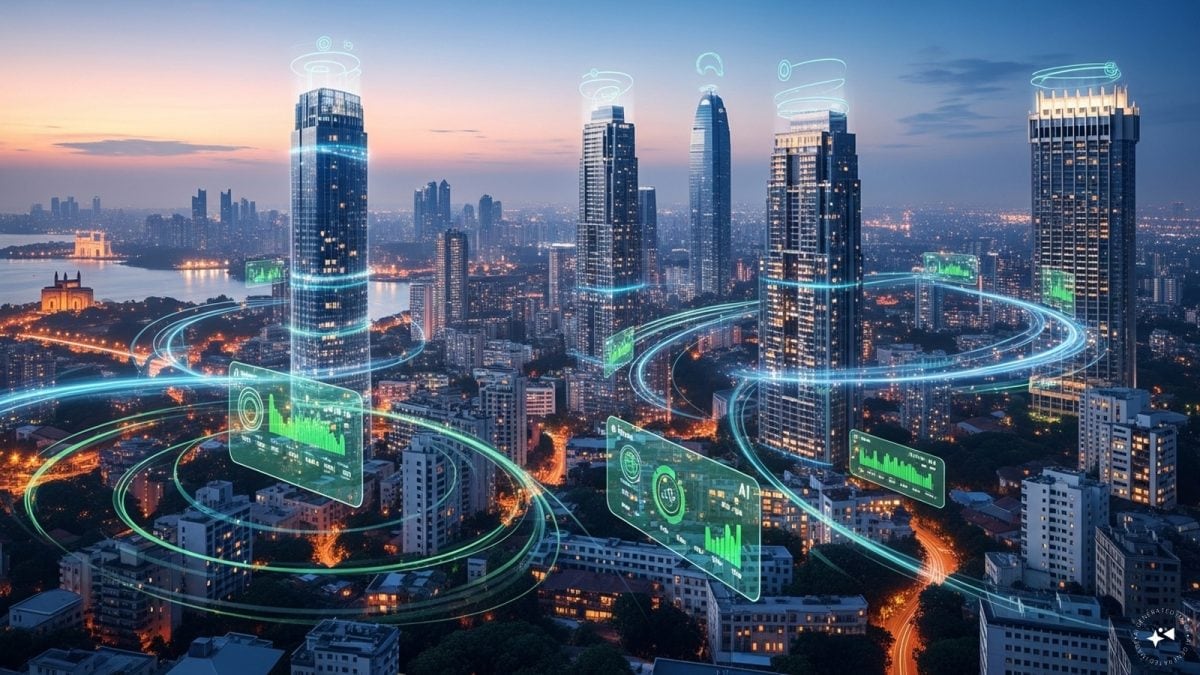
The Mumbai pilot suggests the next phase may be 'healthy buildings', where indoor air quality becomes a core part of infrastructure rather than an afterthought
Mumbai’s real estate sector is set to pilot a new proposition that goes beyond location, design and amenities — the air residents breathe. In what is being positioned as a first for the city, developer Superb Realty has partnered deep-tech firm Praan to deploy an AI-powered air purification system across a large-scale development spanning over 1 million sq ft.
According to a Times Of India report, the rollout will begin with a commercial project and is expected to expand across upcoming residential and mixed-use developments in the city. The move signals an inflection point for an industry where environmental quality, particularly indoor air, is beginning to emerge as a measurable and marketable asset.
From Smart Homes to ‘Healthy Buildings’
For years, real estate marketing has leaned on the language of ‘smart homes’ — automation, security systems and connected devices. The Mumbai pilot suggests the next phase may be ‘healthy buildings’, where indoor air quality becomes a core part of infrastructure rather than an afterthought.
Praan’s system combines real-time environmental sensing with AI-driven optimisation, allowing buildings to dynamically respond to changing indoor and outdoor air conditions. The technology is designed to remove ultrafine particulate matter and harmful gases more efficiently than conventional filtration systems.
“Air remains one of the least optimised systems in building design despite being the most frequently used interface," the report quoted Praan founder Angad Daryani as saying.
Why Air Quality May Become A Realty Premium In Big Cities
Industry voices suggest this is not just a technology upgrade but a potential shift in how property value is defined. As urban pollution worsens and awareness grows, air quality could join location, connectivity and amenities as a key differentiator.
Global studies indicate that individuals spend nearly 90% of their time indoors, where air can often be significantly more polluted than outside due to particulate matter, volatile organic compounds and microbial contaminants. The World Health Organization has consistently flagged air pollution as one of the leading environmental health risks, with several Indian cities ranking among the most polluted.
A Scalable Model
The initial deployment at Superb Altura is being positioned as a pilot that could set a benchmark for wider adoption. The model has been designed for scalability, allowing integration across a broader pipeline of projects if the technology delivers on its promise.
This is where the larger significance lies. If such systems begin to demonstrate tangible health and productivity benefits, developers may increasingly integrate air infrastructure at the design stage, rather than as a retrofit or premium add-on.
For a sector competing on differentiation, especially in premium housing and Grade A commercial spaces, “breathable buildings" could evolve into a new category altogether.
Will Other Cities Follow?
While the current rollout is limited to Mumbai, the implications are national. Cities such as Delhi and Bengaluru, both grappling with worsening air quality and dense urbanisation, present a natural next frontier for such interventions.
If replicated at scale, AI-led air management could reshape buyer expectations, pushing developers to treat air not just as an invisible utility, but as a visible, monetisable feature.