
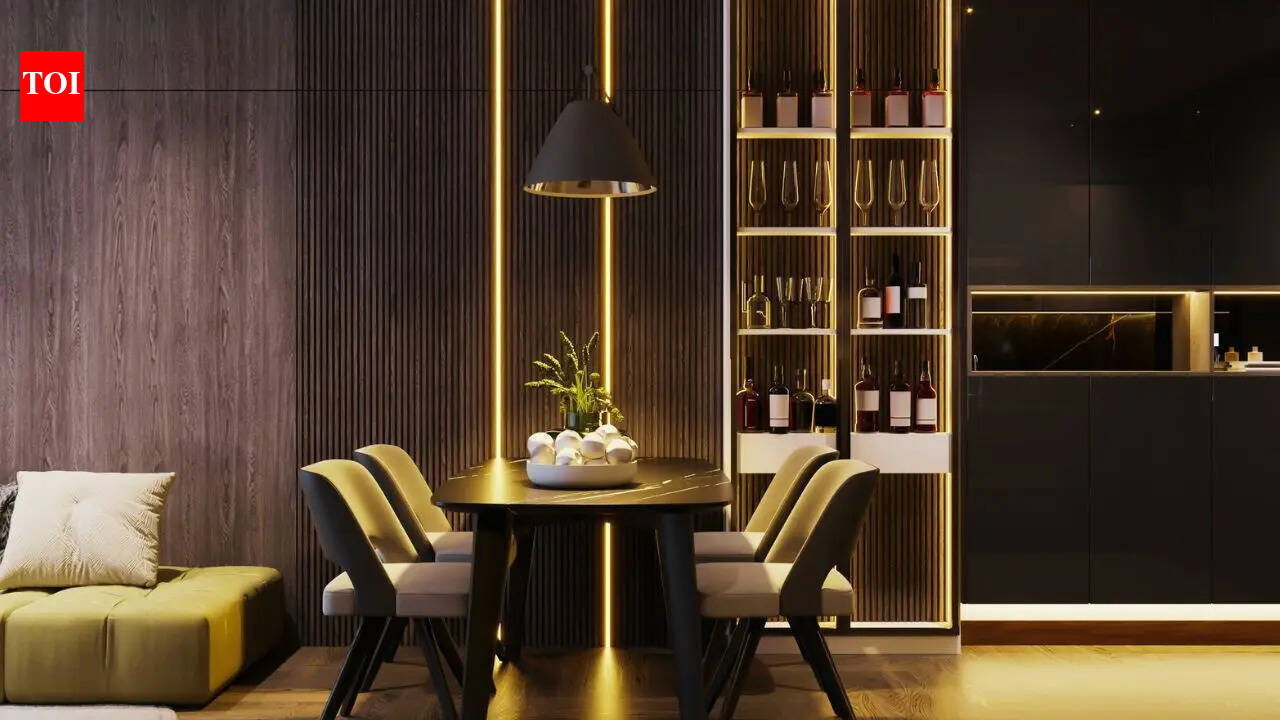
Texture Revolution in Home Design: Adding Depth, Warmth, and Character
What makes a home luxurious? Is it the money spent on its interiors? Or is it the taste and vision of its owner? Though budget certainly plays a role, class and sophistication are not necessarily dictated by price tags alone. The style of a house is a reflection of the personality of its inhabitants.
What are Textured Surfaces?
Textured surfaces are materials and finishes that have a definite physical character rather than a perfectly smooth appearance. Textured surfaces, as opposed to glossy marble, polished tiles or high-shine laminates, have subtle ridges, grains, patterns or irregularities you can see and feel.
- Lime plastered walls
- Brushed wood
- Fluted concrete
- Honed stone
- Terrazzo
- Hand-crafted tiles
- Woven natural materials
Why Texture is Taking Center Stage in Modern Luxury Homes
The popularity of textured surfaces in contemporary design is due to their ability to interact with light. What makes them look classy is that they do not reflect light directly, like a shiny surface does. The light is scattered in various directions giving the impression of a layered appearance which makes the spaces look richer.
Design Elements that are Embracing Texture
-
Floors: A Tactile Experience
Floors are becoming more tactile and design-led. Brushed hardwood, natural stone, terrazzo and handmade tiles are replacing high-polish finishes because they bring character and warmth to a space without overpowering it.
-
Facades: Sculptural Elements
The shift towards texture isn't limited to interiors. Architects are increasingly working with wall cladding, fluted concrete, wooden battens and perforated screens on exteriors. These are materials that catch light differently across the course of a day and make buildings feel dynamic rather than static.
-
Walls: Statement Surfaces
The old rule of keeping walls plain and letting the furniture do the talking is fading. Limewash paint, Venetian plaster, microcement and fluted panels are turning walls into genuine design features.
-
Ceilings: Expressive Surfaces
For years, ceilings were a non-decision. White paint and move on. That's changing. Wood plastic composite ceiling, exposed concrete and layered plasterwork are turning the fifth wall into one of the most expressive surfaces in a room.
-
Wall Décor: Material-Focused
The instinct to fill walls hasn't gone away, but what people are choosing has shifted. Sculptural ceramics, woven textiles, wooden panels and handcrafted pieces are replacing flat prints and framed art because they add something a two-dimensional object simply cannot.
Why Texture Feels Timeless
Natural stone develops a patina. Timber deepens with age. Plaster softens beautifully over time. These materials don't deteriorate; they evolve, and that evolution makes a home feel more personal with each passing year.
Beyond aesthetics, there's an emotional quality to tactile spaces. Rooms built from natural, textured materials tend to feel calmer and more grounding, easier to actually live in.