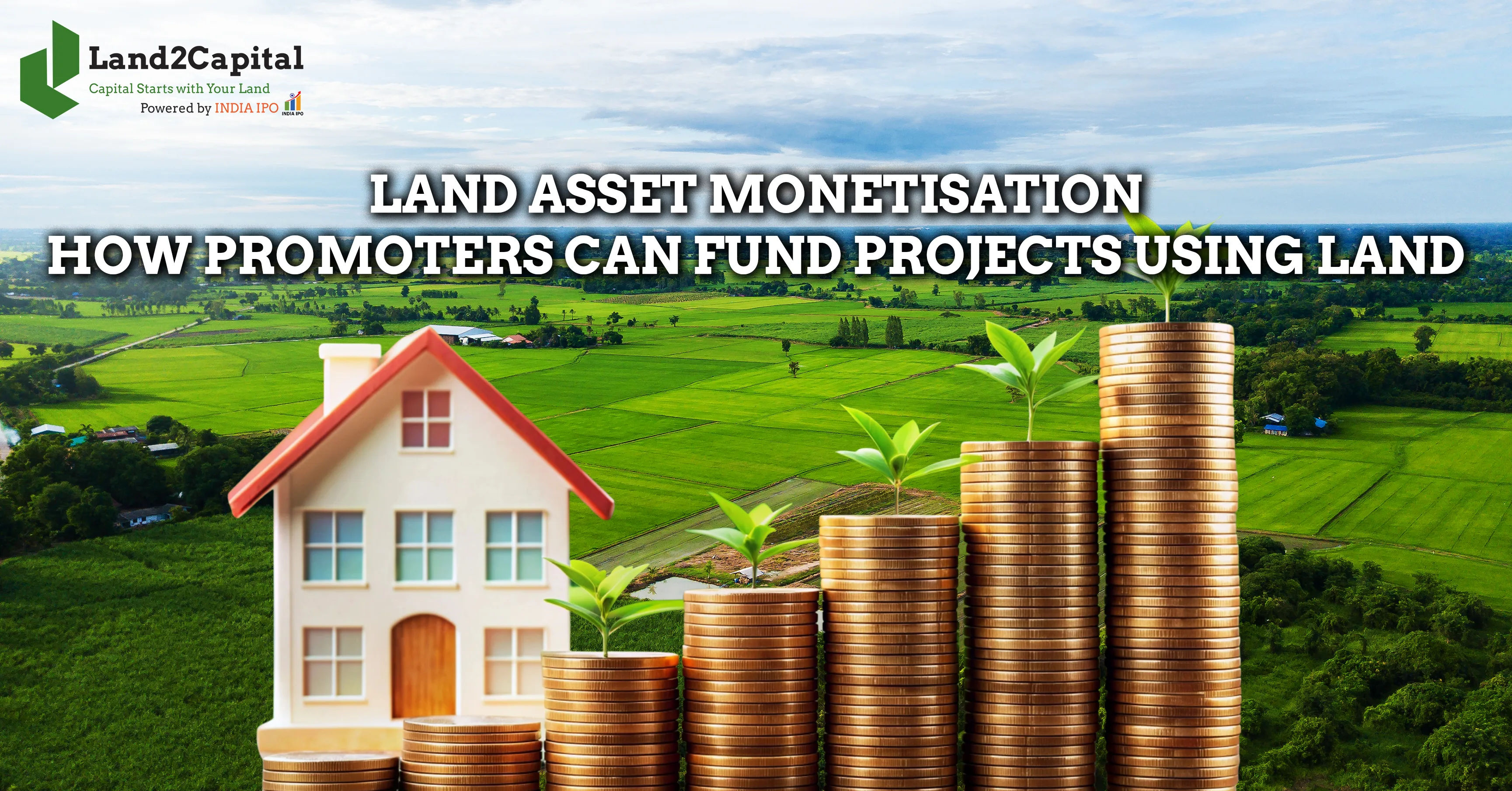
Land Asset Monetization: How Promoters Can Fund Projects Using Land
In India, land has been seen as a source of profit and a security net for generations. But, for the modern generation, the land is no longer just a security asset; it has become a high-leverage fuel for growth. Many Indian promoters find themselves in an impossible "liquidity trap", as they are land-rich but cash-strained.
Land asset monetization is emerging as the preferred strategic alternative to equity dilution. In a market where giving up a percentage of the company to venture capitalists or private equity firms means losing control and future upside, savvy promoters are shifting their mindset. They are moving from the legacy philosophy of "owning land for the sake of possession" to a modern utility model: land to fund growth. By treating their acreage as a strategic financial instrument, land owners can bridge the gap between physical real estate and the immediate capital required to scale industrial, commercial, or infrastructure ventures.
Understanding Land Asset Monetization
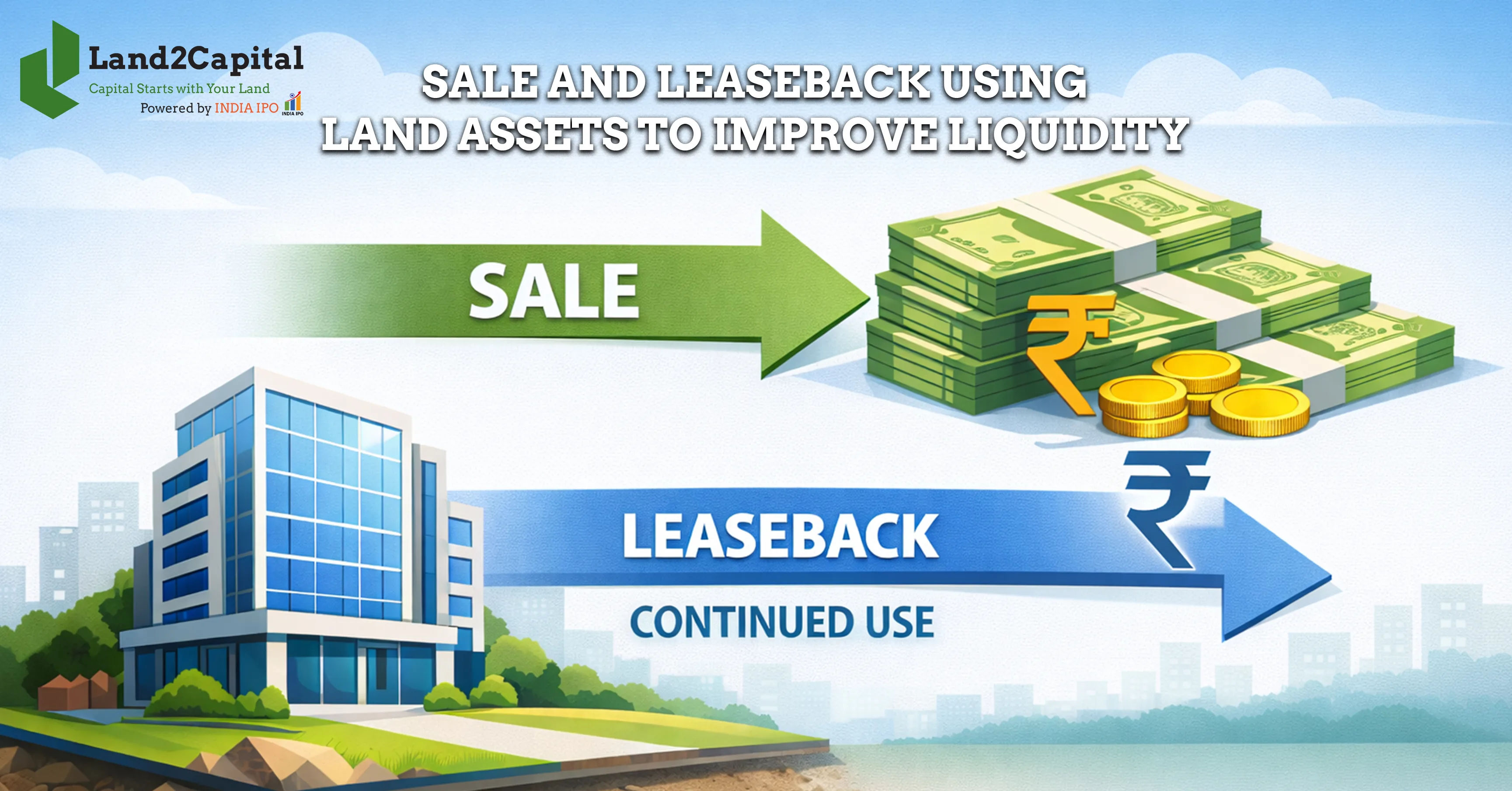
Land asset monetization is often misunderstood as a simple "for sale" sign. In reality, this is a smart financial move that allows a land owner to get cash out of their land without having to sell it. The owner gets to keep the property deed (the title) and still benefits if the land’s value goes up in the future. It’s a way to use the land's value for money today while still owning it for tomorrow. While an outright sale is a one-time liquidity event that terminates the promoter’s interest in the asset, monetization through asset backed financing allows the company to retain the upside of the land’s capital appreciation while using its current market valuation to secure immediate, non-dilutive funding.
A common myth about this; many promoters believe that land backed funding is a "last resort" for distressed businesses. On the contrary, in the modern financial ecosystem, land backed structures are used by some of the healthiest corporations to optimize their weighted average cost of capital (WACC).
It is about financial engineering—transforming an illiquid, non-yielding physical asset into a liquid, high-yielding business operation. Whether through structured debt, leaseback models, or joint development agreements, land asset monetization represents a shift from "dead capital" to "working capital."
Why Promoters Are Increasingly Funding Projects Using Land?
Any promoters can convert land into project capital as there is the sudden increase in land backed funding or land asset monetization is a direct response to the changing face of capital markets.
First, an unstoppable rising cost of equity makes promoter dilution an expensive affair. Every percentage (%) of equity given away today is a significant loss of future wealth.
Second, traditional banking institutions face rigid regulatory constraints, often underwriting loans based strictly on historical cash flows rather than the intrinsic value of the collateral.
This leaves a "funding gap" for projects during the process of asset backed financing, but in the early stages of revenue generation. Promoters are using land as a source of capital for several strategic use cases:
- Financing the construction of new manufacturing units or the expansion of existing units on land already owned.
- Working Capital Optimization-inject liquidity at points where execution cycles get clogged up and thus stave off project delays.
- Using land backed capital for structured debt against land or to fire a last surge in the growth, commanding a better valuation during the public offer of the land.
By leveraging land, promoters ensure that the capital they raise is non-dilutive, thus helping them retain fund projects using land or a structured debt against land when they eventually make it to the stock market.
Types of Land Assets That Can Be Monetized
We saw what land asset monetization is and why it is beneficial, but we are unaware of which type of land can be monetized. As not all land is viewed equally by capital providers, understanding the hierarchy of land value is crucial for a promoter.
Lenders (the land owners), Alternative Investment Funds (AIFs) and NBFCs evaluate land based on its "Highest and Best Use" (HBU). Key types of land that can be structured debt against land quickly:
- Urban and Peri-Urban Land: These are often the most liquid assets, located within or near developing city limits. Their value is driven by residential and commercial demand.
- Industrial Plots: Land falling within developed industrial corridors such as MIDC, GIDC, or RIICO commands a great value due to the in-built infrastructure, power, water and road connectivity, which in turn makes land a low-risk collateral for lenders.
- Warehousing and Logistics Land: With the e-commerce boom, land situated near highways and multimodal hubs has seen a spike in "monetization potential."
- Zoned vs. Non-Zoned Land: Lenders typically look for "NA" (Non-Agricultural) status. However, even "conversion-pending" land can be monetized if the promoter has a clear path to regulatory approval.
Understanding these types of land allows the land owners to ‘prep’ their land—cleaning up titles and securing permissions—to ensure it commands the highest possible LTV (Loan-to-Value) ratio.
Land-Backed Funding: Core Financing Structures Explained
As the right "vehicle" unlocks the capital, just like that, the right type of land unlocks the land backed funding. Land asset monetization is against the "one-size-fits-all" approach; instead, it adopts structures around the cash flow of a particular project. Key financing structures are:
-
Structured Debt Against Land
Structured debt against land is the most common form of monetization. Unlike a standard bank mortgage with rigid EMI schedules, structured debt against land is designed around the project’s gestation period.
Lenders may offer "interest-only" periods or "PIK" (Payment-in-Kind) structures where interest is accrued and paid at the end of the term. This ensures that the promoter’s cash flow is not strained during land backed funding.
-
Land Backed Project Financing
In this model, the land acts as the "anchor" collateral for the fund projects using land. Land backed funding is disbursed in a construction-linked or milestone-based manner.
For example, a real estate or infrastructure project, here the land value provides the initial comfort, while the future cash flows of the completed project provide the repayment security.
-
Asset Backed Financing via Alternative Capital
Asset backed financing normally compares between the old model and new model of land asset monetization. First, Traditional banks are often limited by conservative LTV norms (frequently 40–50%). In contrast, the Alternative Capital ecosystem—comprising NBFCs, Private Credit Funds and AIFs—can offer more aggressive LTVs and flexible covenants. These lenders prioritize the intrinsic value and exit potential of the land over the company’s current P&L.
For a promoter, asset backed financing is an opportunity to raise capital against the asset they own and at a slightly higher interest rate, which is often ignored by the speed of execution and lack of equity dilution.
How Promoters Can Convert Land into Project Capital
Now, a big question that arises in the mind of the promoter is- How can a promoter convert land into project capital? Converting a physical plot into liquid capital is a multi-step journey that requires precision. Some basic steps of converting are mentioned below;
Basically, it begins with a Land Audit and Legal Readiness phase—ensuring the title is "marketable," free of encumbrances and digitally recorded. Any "cloud" on the title can reduce the land's valuation by 30-50% or kill the deal entirely.
The second step is Valuation and Zoning Optimization. Promoters should not rely on government circle rates; they must obtain professional valuations that reflect the "future potential" of the land. Securing NA (Non-Agricultural) or Change of Land Use (CLU) permissions can exponentially increase the borrowing capacity.
Finally, the promoter must match the land with the right Capital Partner. A lender specializing in residential real estate might not be the right fit for an industrial land backed funding. The goal is to move from "simple borrowing" to "structured debt against land."
Key Stakeholders in the Land-Backed Funding Ecosystem
The land backed funding ecosystem is a complex network where real estate developers, financial institutions and government regulators converge to land asset monetization. By leveraging land as collateral, these stakeholders facilitate large-scale infrastructure and residential growth across India. A successful land asset monetization is a collaborative effort involving several high-level players:
- Promoters and Landowners: They are the foundational visionaries who contribute the core asset. They unlock the actual land valuation to catalyze development, seeking liquidity while retaining projects upside through strategic monetization.
- Capital Providers (NBFCs, AIFs, Private Credit): The primary liquidity engines offering asset backed financing. These entities assess risk profiles and provide flexible, high-yield capital secured by the land’s underlying collateral value.
- The valuation and legal experts: Essential "gatekeepers" who mitigate risk by verifying clear titles and market worth. Their due diligence ensures legal compliance and establishes the critical loan-to-value (LTV) benchmarks.
- Structured Finance Advisors: Architects of the deal who align funding models with business goals. They mitigate "funding friction" by negotiating complex terms, ensuring seamless capital flow and operational harmony.
But, an efficient land backed funding relies on the seamless integration of these four stakeholders. By aligning visionary ownership with disciplined capital and expert oversight, the land asset monetization ecosystem transforms stagnant acreage into dynamic economic growth.
Risks, Challenges and How to Mitigate Them
Beyond the benefits, there are some risks and challenges while the process of land asset monetization. Perhaps the largest challenge in the context of India is the aspect of clear titles or we can say that, the clear image of the land owner means no litigations or ongoing cases on the land and land owner. Another challenge emanates from the aspect of delays in zoning or conversion from the concerned authorities. This could result in the "Debt Trap," depending on how the loan is structured or how to retain a structured debt against land.
To avoid these risks, promoters must adopt a "Legal First" strategy, conducting comprehensive independent due diligence before engaging any lending institution, like Land2Capital Services. An expert can help in avoiding over-leveraging is equally critical in asset backed financing; borrowing to maximum capacity during a market peak often leads to disaster once a correction occurs.
A service like Land2Capital, maintains a strong "liquidity buffer" and ensures the exit strategy remains diversified. Repayment should not rely solely on the speculative sale of the land itself but should be anchored to the sustainable cash flows generated by the specific fund projects using land.
Strategic Use Cases: Where Land-Backed Funding Works Best
In today's evolving real estate market, land backed funding has emerged as a high-leverage tool for developers looking to convert land into project capital, by using property as collateral rather than selling it with high valuation, promoters can unlock liquidity to scale operations, fund pre-construction approvals, or refinance high-cost debt without diluting equity. Some key strategic funding are:
- Real Estate: Land backed funding allows land owners to maintain 100% ownership of their townships. After converting land into project capital, they secure construction capital without diluting equity to partners.
- Industrial Expansion: Manufacturers can unlock "dead" capital from existing factory land banks. This liquidity enables the rapid setup of new EV-focused production lines without straining operational cash flows.
- Warehousing: In metro outskirts where land value constitutes 60% of project costs, this model is ideal. It provides the heavy upfront capital required to construct "Grade-A" facilities.
- Pre-IPO Structuring: Companies use land backed funding to settle high-cost liabilities or consolidate holdings. This "cleans" the balance sheet, creating a leaner, more attractive profile for public investors.
Strategic land backed funding transforms passive acreage into a versatile financial tool. Whether avoiding equity dilution in townships or streamlining balance sheets. But, this model provides the necessary liquidity to bridge the gap between land ownership and large-scale operational success.
Future of Land Asset Monetization in India
The future of Indian land asset monetization lies in its shift toward professional, structured institutionalization. We are moving away from the era of "unorganized land holding" toward a transparent, digital and financially liquid market. We will see the rise of Land REITs (convert land into project capital), more sophisticated Private Credit instruments and even the tokenization of land assets.
As land records become increasingly digitized via government initiatives, the speed of land backed funding will move from months to weeks. Promoters who treat their land as a financial instrument today will be the ones who lead the market in the next decade in India.
Conclusion: Turning Land Ownership into Financial Leverage
A Land serves as the foundational engine for urban development, evolving from a static asset into a dynamic tool for scaling infrastructure and residential growth. Effective land asset monetization hinges on strategic structuring rather than distress sales, ensuring that promoters maintain control while unlocking liquidity.
By aligning with professional capital providers and legal experts, like Land2Capital Services, developers can navigate market cycles with resilience. Ultimately, the shift toward institutionalized land backed funding proves that in a modern economy, land is no longer just land wealth—land backed funding is a powerful financial leverage that, when managed with foresight, fuels long-term sustainable expansion by providing structured debt against land.