
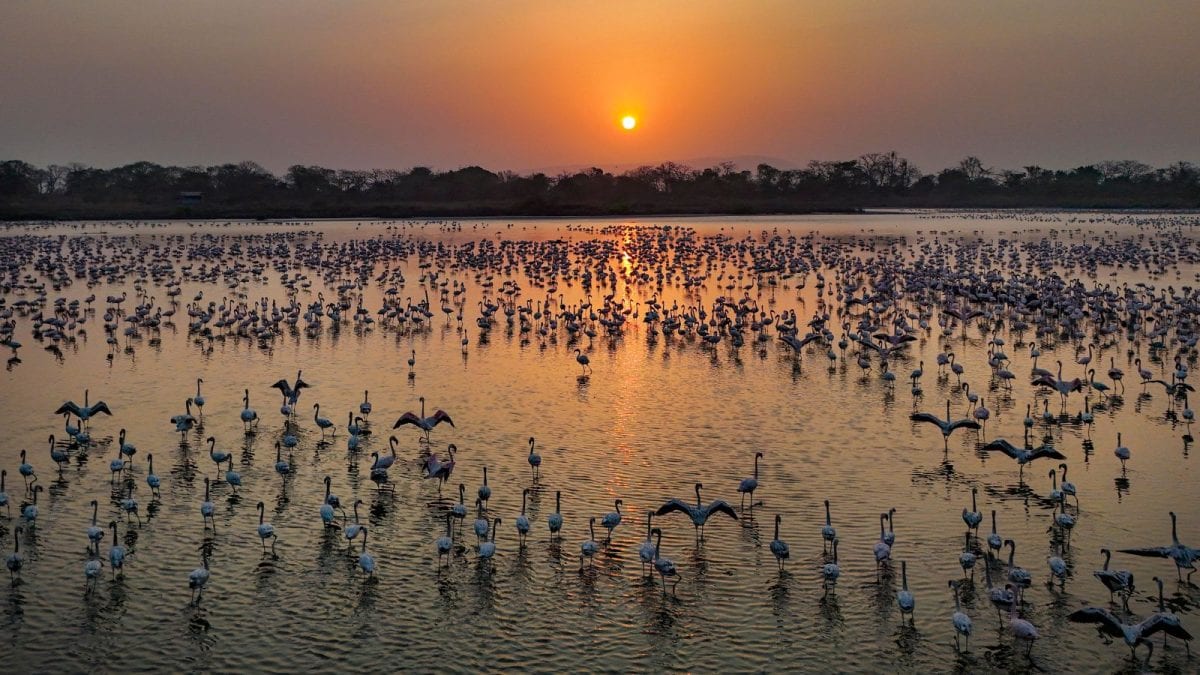
Flamingo Habitats in Navi Mumbai Face Uncertain Future as Wetland Committee Makes Ruling
A fresh flashpoint has emerged in the long-running battle between development and ecology in the Mumbai Metropolitan Region, following the Thane district-level Wetland Committee's decision to rule that key flamingo habitats in Navi Mumbai do not qualify as wetlands under the Wetlands (Conservation and Management) Rules, 2017.
Environmentalists React Sharply to the Committee's Decision
The decision, part of a broader review of eight water bodies across Thane and Navi Mumbai, has triggered sharp reactions from environmentalists, who allege that the panel has ignored scientific evidence, judicial observations and even central guidelines while arriving at its conclusions.
The Ecological Significance of the Sites at the Heart of the Controversy
- The NRI and TS Chanakya water bodies are integral to the larger ecosystem of the Thane Creek Flamingo Sanctuary, a globally recognised habitat that hosts thousands of migratory flamingos each year.
- Activists argue that these sites function as satellite wetlands feeding into the sanctuary’s fragile biodiversity network.
Calling the Findings "Deeply Flawed", Environmentalists Point to Scientific Evidence
The NatConnect Foundation argued that both sites are essential to the conservation of Navi Mumbai's wetlands, including flamingo habitats, citing studies by the Wildlife Institute of India that have previously emphasised the urgent need to conserve these areas.
The Committee's Approach Draws Criticism
The panel leaned heavily on planning and land-use classifications, citing factors such as artificial origin, development zoning and prior land ownership to exclude the sites from wetland status.
- The committee report makes no reference to earlier observations by the Bombay High Court, which had treated water bodies near TS Chanakya as part of a sensitive ecological system requiring protection.
- Environmentalists also raised questions over the limited role given to the National Centre for Sustainable Coastal Management, which has been tasked by the Union environment ministry to map wetlands under the national atlas.
For conservationists, the decision is not just about technical definitions, but about whether critical urban ecosystems will be protected for what they sustain—biodiversity, flood buffers and climate resilience.
Environmentalists argue that if these flamingo habitats can be written off as “non-wetlands", it sets a precedent where ecological value is negotiated not in the field, but on paper, and often, too late to reverse the damage.