
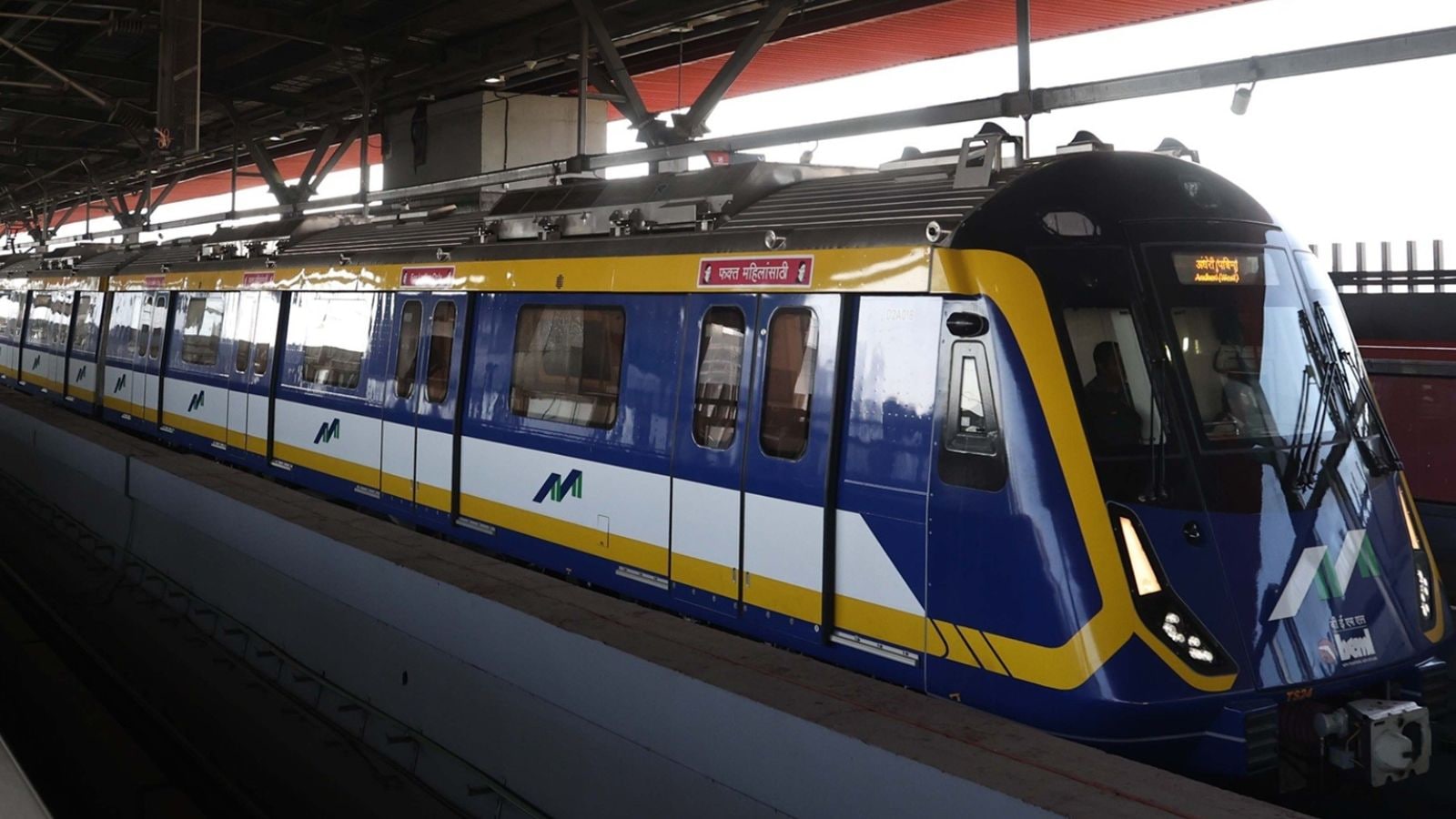
Farmers' Dispute Over Land Acquisition for Metro Depot Continues
The dispute over land acquisition for a crucial metro depot in India has seen little progress despite its strategic importance.
The issue dates back to 2018 when land acquisition began, revealing 198 farmers cultivating the plot, primarily for paddy. Out of these, 167 were recognized as Class-2 (leasehold) cultivators in 1967, while 31 were classified as encroachers.
- Rakesh Patil, a farmer from Owala village: “While our forefathers have cultivated this land for decades, the government formally recognised us as lessees in 1967.”
- Land acquisition officials claim the land belongs to the Collector and was allotted for cultivation to prevent encroachment.
- The distinction between leasehold (Class-2) and freehold (Class-1) rights has become the central point of contention.
Dispute Over Compensation
Under the government’s transfer terms, recognized cultivators are offered 22.5% developed land and encroachers 12.5% compensation, as per CIDCO policy.
Farmers have rejected this offer, demanding compensation under the Right to Fair Compensation and Transparency in Land Acquisition, Rehabilitation and Resettlement Act, 2013, which would provide monetary compensation based on market rates.
Rakesh Patil: “As farmers, developed land is of little use to us. We need compensation that allows us to buy agricultural land elsewhere and sustain our livelihoods.”
Recent Developments
- In October 2023, the state transferred the land to MMRDA.
- In 2024, farmers under the Kharbhumi Krushi Samnvay Samiti moved the Bombay High Court.
- In June 2025, the court dismissed their petition, citing public interest and allowing the government to proceed with the integrated metro depot.
- In October 2025, environmental clearance from the Maharashtra Coastal Zone Management Authority was obtained.
- In November 2025, MMRDA proposed converting rehabilitation plots from leasehold to freehold.
Farmers remain firm on monetary compensation and are preparing to move the Supreme Court within a month.
The absence of the depot is not expected to delay the initial operations of Metro Lines 4 and 4A, thanks to interim pit-line maintenance facilities. However, it may restrict train frequency in the early phases.