
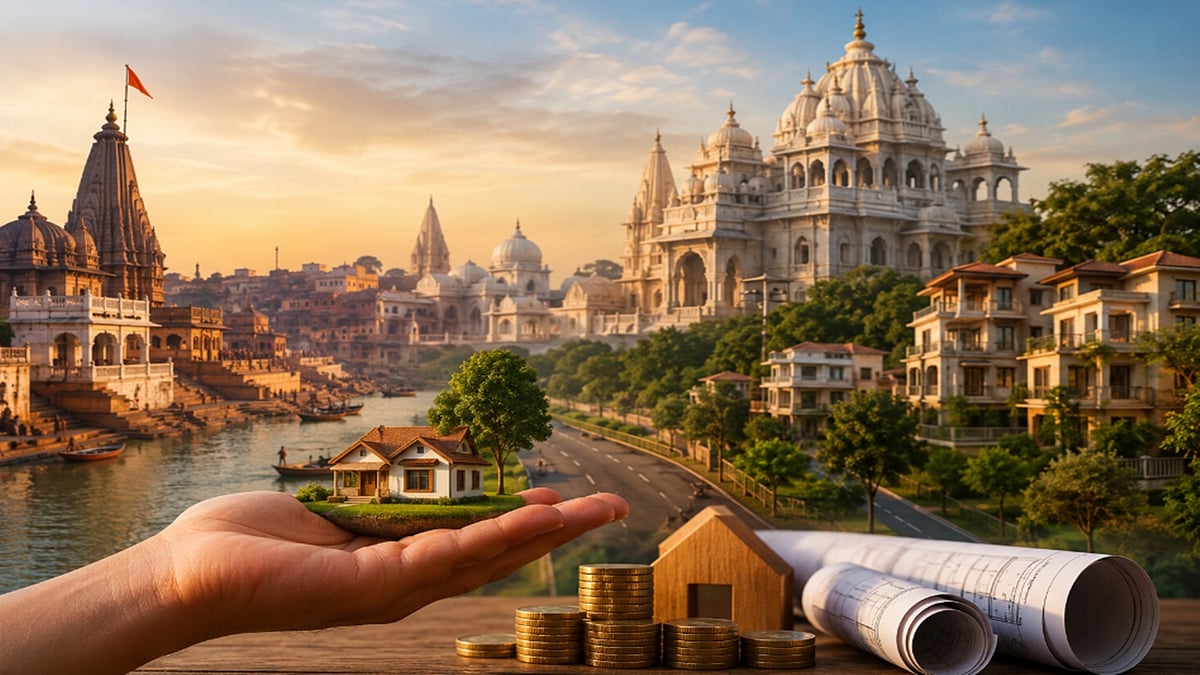
Pilgrimage Cities Emerge as India's Most Talked-About Real Estate Hotspots
Over the past 3-5 years, pilgrimage-led real estate markets such as Ayodhya and Vrindavan have seen strong appreciation driven by infrastructure growth and rising investor participation.
Primary Drivers of Demand for Real Estate in Pilgrimage Cities
The transformation is being fuelled by massive infrastructure upgrades, better roads and connectivity, airport expansion, railway modernisation, and government-backed redevelopment projects.
- Massive infrastructure upgrades
- Better roads and connectivity
- Airport expansion
- Railway modernisation
- Government-backed redevelopment projects
Landmark Developments and Visitor Numbers
Landmark developments such as the Ram Mandir in Ayodhya, the Kashi Vishwanath Corridor in Varanasi, and preparations linked to mega religious gatherings like the Mahakumbh have dramatically increased visitor numbers and renewed interest in these cities.
- 11 crore tourists in Ayodhya in just six months
- 7.26 crore tourists in Varanasi in 2025
Pilgrimage Boom Spurs Realty Growth in Nearby Cities
The growing influx of tourists and property buyers in pilgrimage hubs is now boosting real estate activity in nearby cities as well.
- Rajasthan continues to be viewed as a spiritually-significant state
- Khatu Shyam, Pushkar, and Ajmer attracting sustained pilgrim footfall
- Jaipur seeing growth in stopover traffic and longer stay tourists
Buyer Profile in Cultural Destinations
The buyer profile in cultural destinations has become far more diverse, with investors and second-home buyers continuing to dominate, particularly those seeking long-term appreciation and wealth preservation.
- Investors and second-home buyers dominating
- NRIs and globally-mobile Indian families investing to maintain cultural ties
- Devout property buyers, including HNI and NRIs, at the forefront
How Sustainable is the Current Price Rally?
According to developers, the current rally in pilgrimage cities such as Ayodhya, Vrindavan, Varanasi, and Amritsar appears relatively sustainable because it is being driven by infrastructure creation, tourism growth, and urban development rather than short-term sentiment alone.
Kind of Projects Witnessing Maximum Demand
Industry experts say plotted developments and branded land ecosystems are currently witnessing the strongest demand.
- Plotted developments and branded land ecosystems
- Premium villas, second homes, and hospitality-led developments
Precautions to Take Before Investing in Pilgrim Destinations
In these markets, purchasers need to undertake extra due diligence.
- Check land titles, clear ownership documents, and RERA registration of plots
- Insist on a clear possession date and the developer's track record
- Analyse realistic rental yields versus aspirational capital gains
Future Prospects of Real Estate in Pilgrimage Cities
According to industry experts, the long-term outlook for pilgrimage city real estate remains highly positive due to ongoing infrastructure development, rising tourism, and improving connectivity.
- Ongoing infrastructure development
- Rising tourism
- Improving connectivity
FAQs
Q1: Why are pilgrimage cities attracting property buyers?
A1: Ayodhya, Vrindavan, and Varanasi are witnessing strong traction among investors as well as end-users because of improved connectivity, increasing tourist footfall, government-led redevelopment projects, and high potential for price appreciation.
Q2: Which property segments are seeing the highest demand?
A2: While plotted projects are seeing strong demand in Ayodhya and other upcoming pilgrimage centres, properties such as second homes/villas, hospitality units, and retirement homes are registering decent demand in most popular pilgrim centres.
Q3: What should buyers check before investing?
A3: Experts suggest that buyers should conduct a due diligence check on title clearance and RERA registration of the land, developer credentials, infrastructure development activities in the vicinity, and analyse the rental yield to ensure it is realistic.