
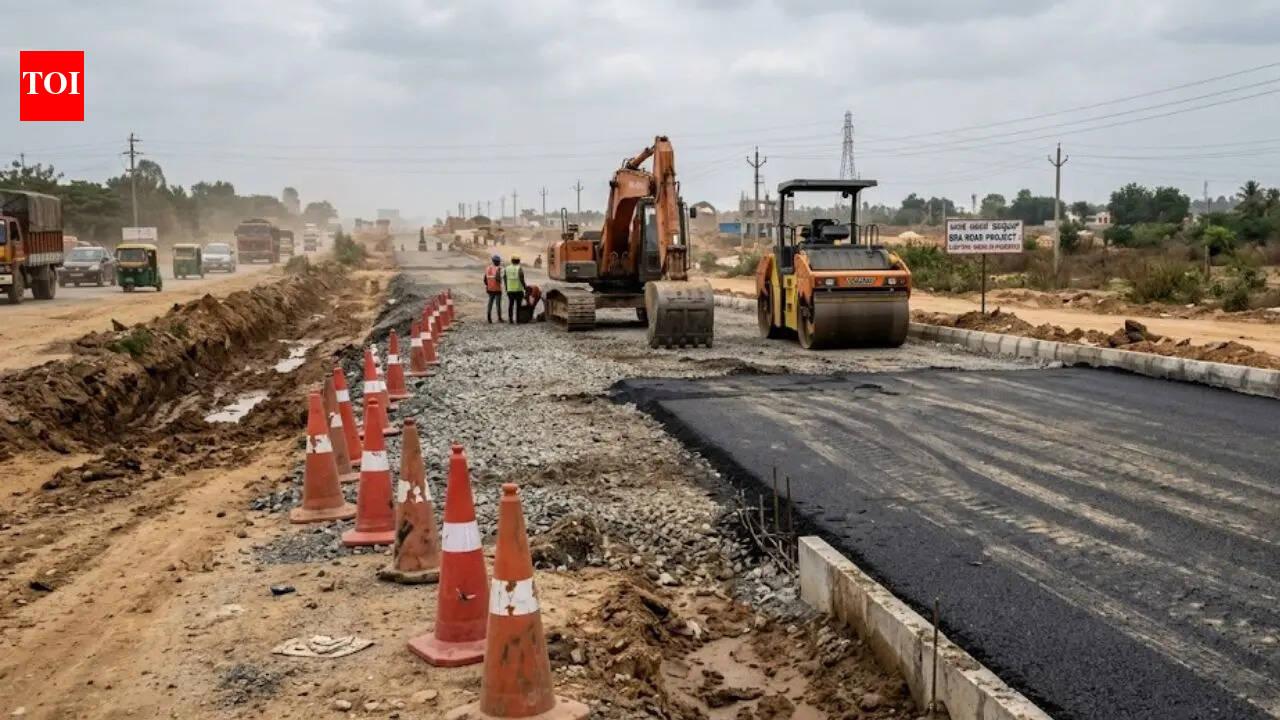
Govt Revives Bengaluru's Intermediate Ring Road Project
Key Highlights of the Revived Project
- Cost-Efficient Solution: Aims to spur growth around Bengaluru's satellite towns by bypassing earlier land acquisition hurdles.
- 210km Corridor: Proposed in 2007, but remained stalled due to litigation and acquisition challenges.
- BMRDA Execution: The Bengaluru Metropolitan Regional Development Authority will execute the IRR project.
- Regional Mobility: Aims to form a critical mobility ring connecting emerging growth centres across the city's outskirts.
Revised Plan Focuses on Reconnecting Satellite Towns
The revived plan focuses on reconnecting 12 satellite towns, including:
- Thattekere
- Harohalli
- Bidadi
- Tavarekere
- Nelamangala
- Devanahalli
- Hoskote
- Dommasandra
- Anekal
Background of the Project
The project was first proposed in 2007 but remained stalled due to litigation and acquisition challenges.
Earlier alignment issues and litigation led the Karnataka High Court in Aug 2022 to direct a change in plan.
The revised version later faced issues due to inconsistent road widths and lack of detailed surveys.
Updated Plan Includes Original 2007 Alignment
After multiple revisions, officials decided to revert to the original 2007 alignment with limited modifications.
The earlier alignment had already been included in master plans of several planning authorities, reducing potential conflicts and easing integration with regional road networks.
Minimising Disruption to Existing Layouts
The updated plan aims to minimise disruption to existing layouts, with developers expected to transfer land free of cost through relinquishment deeds during approval.
This approach is expected to reduce the government's land acquisition burden significantly.