
The Hiranandani Group, while retaining its interest in luxury homes, has started branching out. It wants a bigger share of the pie, be it data centres, managed offices, hotels and resorts, or warehousing.
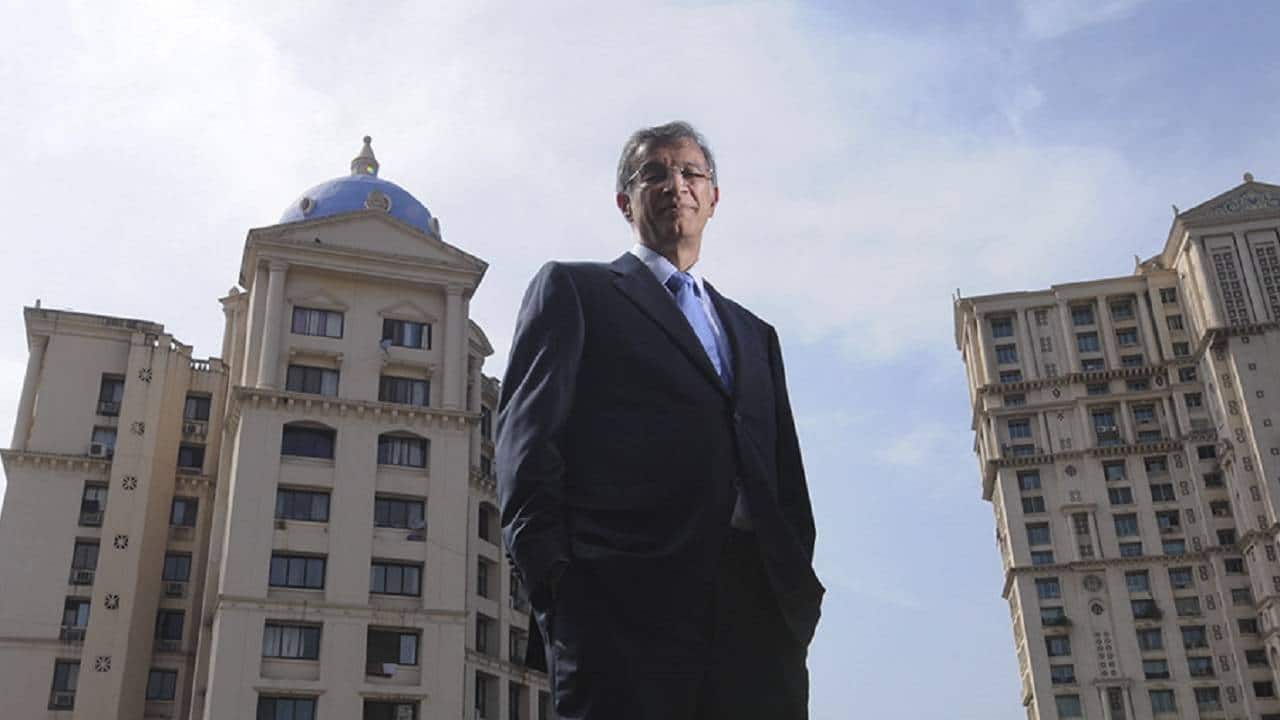
Mumbai-based real estate tycoon Niranjan Hiranandani, who heads the multibillion dollar-Hiranandani Group, said in a recent interaction with Moneycontrol that reverse investments by the Indian diaspora in the country's real estate has already started taking place, as the Iran-US-Israel conflict spills over into the Gulf states.
Hiranandani Group, which is known for its township projects in the Mumbai Metropolitan Region (MMR), such as Hiranandani Gardens in Powai and Hiranandani Estate in Thane, continues to develop premium-to-luxury housing in its existing land parcels, and has also been taking on redevelopment projects, although incrementally.
During the interaction, Hiranandani noted that while the ongoing geopolitical tensions are bound to impact global economies, including the Indian diaspora, the real estate sector is expected to perform better than expected, owing to reverse investments, and the continued momentum in home sales in the post-pandemic period.
The group is now evolving strategically, monetising some of its existing assets, such as the sale of its office and retail portfolio to Brookfield for $1 billion, and entering new segments, such as data centres, warehousing, luxury resorts, hotels, as well as student and senior living, to create a new class of income-generating real estate.
Edited excerpts:
Given the geopolitical situation and since Dubai is a hub for Indian wealth, how do you see things playing out in the next few quarters? Will Indian real estate benefit?
India receives significant remittances from the Middle East, at over $40 billion. Many Indian workers there are now t risk. Energy costs have also risen, with crude oil price increasing from $60–70 to more than $100 per barrel, increasing overall input costs. India’s GDP (gross domestic product) growth may drop from 7.4 percent to around 6.4 percent, if the situation continues. The RBI (Reserve Bank of India) has kept interest rates steady due to inflation concerns, though rate cuts earlier helped boost lending. Retail home loans grew about 15 percent last year, and NPAs (non-performing assets) are very low.
Despite slower GDP growth, real estate is still growing faster than the rest of the economy. Why? Because of reverse investment.
Earlier, Indians invested abroad. Now, money is coming back into India. NRIs, especially from the US and Middle East, are increasingly investing here. In my last month’s sales, 25 percent came from NRIs, and 20 percent of that was from the US alone. This trend has picked up, post-war. It’s not a flood yet, but it’s growing steadily. Real estate investment takes time, but the direction is clear.
What are the key drivers of real estate growth in India today?
There are three major factors. One, people realised the importance of homes. Earlier, they spent most time outside. During COVID, entire families stayed at home, which increased the demand for bigger and better homes.
Secondly, massive infrastructure expansion, such as highways, airports, metros, and tunnels, is creating a multiplier effect. And lastly, people now want more than just four walls. They want schools, hospitals, retail, amenities like clubhouses and pools. They are willing to pay higher maintenance for better quality of life.
How do you see formalisation and consolidation in real estate?
Every industry consolidates eventually. Real estate is the last to do so, but it is happening. Five years ago, there were about 20,000 developers in the MMR region; now it’s down to 12,000. Even with 10 percent annual growth, the number of players is reducing. RERA (Real Estate Regulatory Act) has been a major positive. It has improved customer safety and ensured better use of funds. Earlier, projects were delayed indefinitely. Now, things are much more structured.
Will big brands dominate real estate, going forward?
India is too large for anyone to dominate completely. But consolidation will continue. Bigger, more trusted players will grow faster, though smaller players will still have a role.
What do you see as the major trends and opportunities in real estate?
There are several. Data centres are growing rapidly with demand for AI, with Yotta (Hiranandani Group's data centre platform) having a large number of GPUs made by NVIDIA. Global capability centres (GCCs) are being driven by the availability of talent in major cities such as Mumbai, Bengaluru, and Hyderabad.
Hospitality is growing due to an increase in domestic tourism. Senior living is also an interesting new segment, as we see that seniors themselves are not willing to live with their sons and daughters anymore. They have the means to live by themselves, and have people to look after their needs in senior living communities. Student and rental housing are the next big opportunities that we may look at. And in warehousing, we have a platform with Blackstone.
How do you see your own business journey at this stage?
I feel like I’ve just started. In the last two years, we’ve entered data centres, hospitality, joint ventures, redevelopment, and more. We’re constantly exploring new opportunities. India offers huge potential, and new ideas keep emerging. Growth opportunities today are unbelievable.
Do you plan to tap equity markets or launch an REIT (Real Estate Investment Trust)?
Maybe. But equity is the most expensive form of capital. I don’t need money right now. If I scale up significantly next year, I may consider it.
At this stage in life, what drives you personally?
I feel gratitude. At 76, I’m thankful for health and the ability to work. I describe myself and my wife as religious persons, but we have one big difference. She's a bhakti yogi. My karma, my work, is my prayer to God. So I also pray to God directly, but that is for 2 minutes in a day. Rest of the 23 hours goes in to work, minus the sleep. So, in reality, I'm a karma yogi.
And work doesn't necessarily mean to earn. People misunderstand what money becomes after a certain point. I run colleges, schools, hospitals, without earning from them. At some point, purpose matters more than wealth.
What is your outlook on India’s future and strategic priorities?
Energy is critical. Along with solar and wind, India must focus on modular nuclear power. That’s the long-term solution for energy independence.
Also, housing and infrastructure must be scaled up further. Housing alone impacts over 260 industries and is the second-largest employer after agriculture. We already face a shortage of skilled construction workers, and this gap will widen. Real estate and infrastructure will be key drivers of India’s growth.