
The Kerala government led by Chief Minister VD Satheesan has scrapped the controversial ₹69,000 crore K-Rail SilverLine project, citing environmental concerns, displacement issues and feasibility challenges. The administration has also ordered cancellation of land acquisition linked to the project.
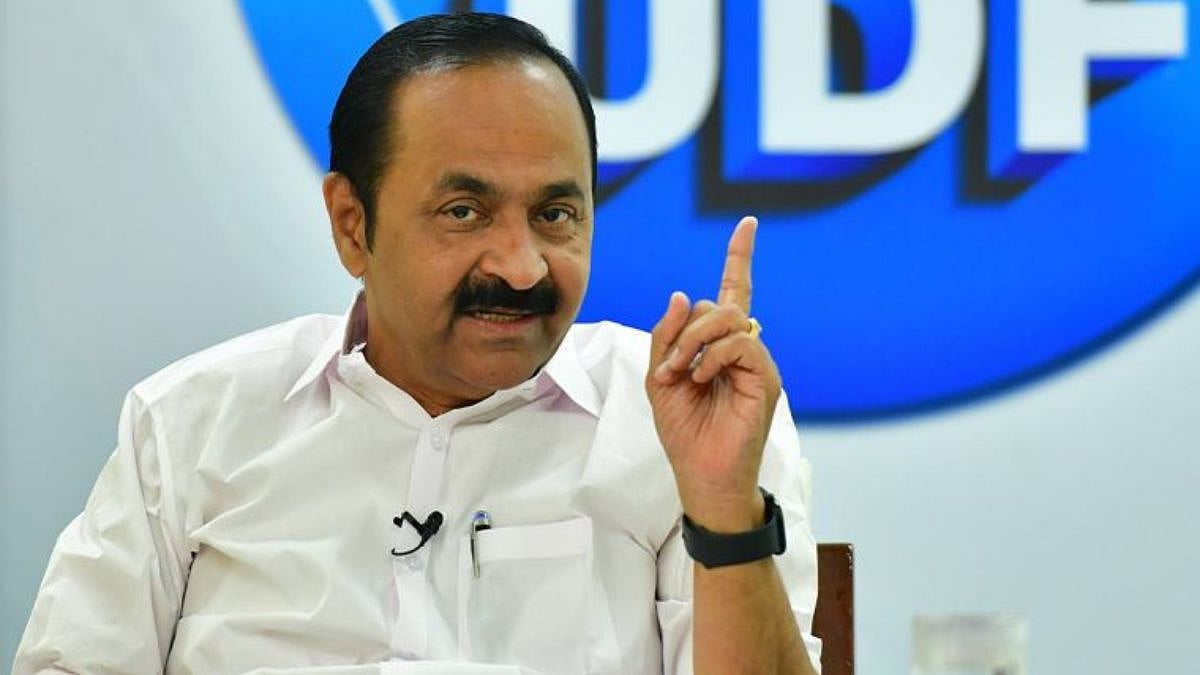
The decision of the newly installed UDF government led by Chief Minister VD Satheesan in Kerala to scrap the ambitious K-Rail semi-high-speed train project is realistic and sensible.
Conceived as early as 2009 by the Left Front government, the planned rail system was later christened the Silverline from Thiruvananthapuram to Kasaragod, covering 529 km in four hours, with stops at 10 stations, including the Kochi airport.
Kerala’s need for efficient and fast transport cannot be overstated, both because it has a highly mobile population that frequently travels north-south and because many people work in towns away from where they live.
This pattern is confirmed by the massive response that two Vande Bharat trains connecting the state capital with Mangalore and Kasaragod have received, in spite of delays in their operational timings, prompting the Railway Ministry to upgrade both to 20-car rakes last year.
Yet, the Rs 69,000 crore K-Rail was impractically ambitious for a largely montane state that hosts a good part of the Western Ghats. The ecological health of these mountains is crucial for the Indian subcontinent.
As a separate rail system, K-Rail envisaged the Union government becoming a partner holding 49%, although there was little interest in the Railway Ministry in a project that it said ran parallel to, and in close proximity to, its existing tracks.
Little surprise, therefore, that the ministry found the K-Rail Detailed Project Report, submitted by Kerala, deficient in many respects and called for a fresh DPR.
Concerns over displacement and ecology
Conceptually, the Kerala proposal was doomed because of its disregard for the high human cost of displacing nearly 10,000 families, who have now greeted the UDF decision wholeheartedly.
They are also bound to feel doubly reassured because the Chief Minister has ordered all acquisitions cancelled and the land to be returned forthwith.
The wise move to withdraw the project provides much-needed reassurance that sensitive and biodiverse areas of the Western Ghats spread across scores of hectares would be spared the axe, unlike Great Nicobar, where massive, avoidable forest destruction for a port-airport-housing-defence plan is feared.
Focus on strengthening existing rail network
The bright spot in Kerala is that the existing railway infrastructure can be augmented, and going by recent statements in Parliament, budgetary support for capital works by the ministry rose eightfold last year to Rs 3,042 crore compared to the previous year.
Kerala residents mostly travel inter-city rather than to the farthest points, a pattern better served by Regional Rapid Transit Systems on existing tracks. Increasing passenger capacity through modern coach design and higher frequency of trains must receive priority.
Pending works, such as 146 km of new lines and 120 km of track doubling, need to be completed early. Even air-conditioned EMUs, which have failed to attract passengers in cities such as Chennai, can be readily redeployed for Kerala’s commuters. Any alternative high-speed proposal would have to address the same concerns as K-Rail.