
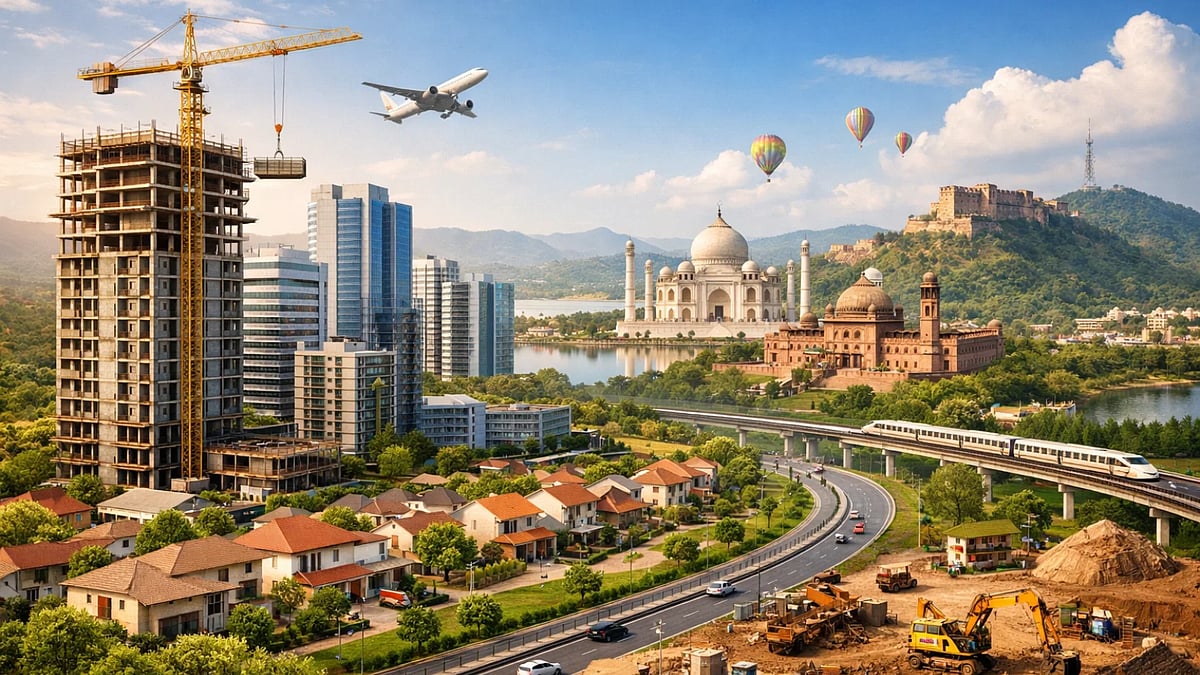
Indian Real Estate Sector Faces Fresh Wave of Cost Pressures
The Indian real estate sector is facing a fresh wave of cost pressures due to disruptions in the West, leading to rising steel and cement prices, volatile freight rates, and delays in material imports.
According to a report by JLL, construction costs have increased by nearly 10-20% in several sub-segments of the industry. However, Tier-2 cities have emerged as resilient during this period.
Geopolitical Tensions Impact Indian Real Estate Sector
- Rising steel prices
- Supply chain disruptions
- Increasing construction expenses
The ongoing geopolitical tensions across global markets are impacting India's real estate sector, creating pressure on developers, project timelines, and homebuyer sentiment across the country.
Tier-2 Cities Show Resilience
Tier-2 cities, such as Indore, Ahmedabad, Jaipur, Lucknow, and Coimbatore, have shown remarkable resilience in terms of adaptability. These cities are not just the second in line to metros in terms of buyer preference but are also upcoming growth centres.
- Improved connectivity
- Rising employment
- Expanding infrastructure
Advantages of Tier-2 Cities
One of the biggest advantages these cities have to offer is the balanced land economics. In metro markets, land acquisition costs are already high, leaving little room for stakeholders to absorb sudden increases in expenses.
- Lower land costs
- Comparatively lower land acquisition costs
Tier-2 cities provide the stakeholders with the ability to manage temporary shocks without affecting projects.
CREDAI Urges Ministry to Grant Extension for Project Completion Timelines
The Confederation of Real Estate Developers' Association of India (CREDAI) has urged the Ministry of Housing and Urban Affairs (MoHUA) to appeal to the Real Estate Regulatory Authorities of each state to grant a three-to-six-month extension for project completion timelines.
This request is reflective of the concerns developers across several regions continue to face execution-related upheavals, including supply chain disruptions, rising construction costs, and delays in approvals.
Regulatory Environment Supports Indian Real Estate
The recent request by industry bodies like CREDAI is not a sign of weakness in Indian real estate but part of a global economic adjustment cycle. Importantly, India's regulatory environment today is far more mature, with RERA, escrow-linked protections, and stricter compliance frameworks providing stronger safeguards for homebuyers.
Industry stakeholders have noted that infrastructure-led growth across states, especially tier-2, has accelerated, and even new projects have been launched. CREDAI's appeal extends the project timelines that would support developers in terms of finances and reputation, as well as protect homebuyers' interests.
By making sure the projects are completed in a structured manner, and the developer doesn't compromise on materials to meet deadlines, the appeal aims to ensure the interests of both developers and homebuyers are protected.