
Delhi Gymkhana Club Membership Fees: Occupying some of India's most valuable, government-owned real estate, elite clubs from Delhi to Mumbai are facing uncomfortable questions. The Delhi Gymkhana row has sparked a conversation on whether public land should continue to support private privilege, and it has left the elites sweating.
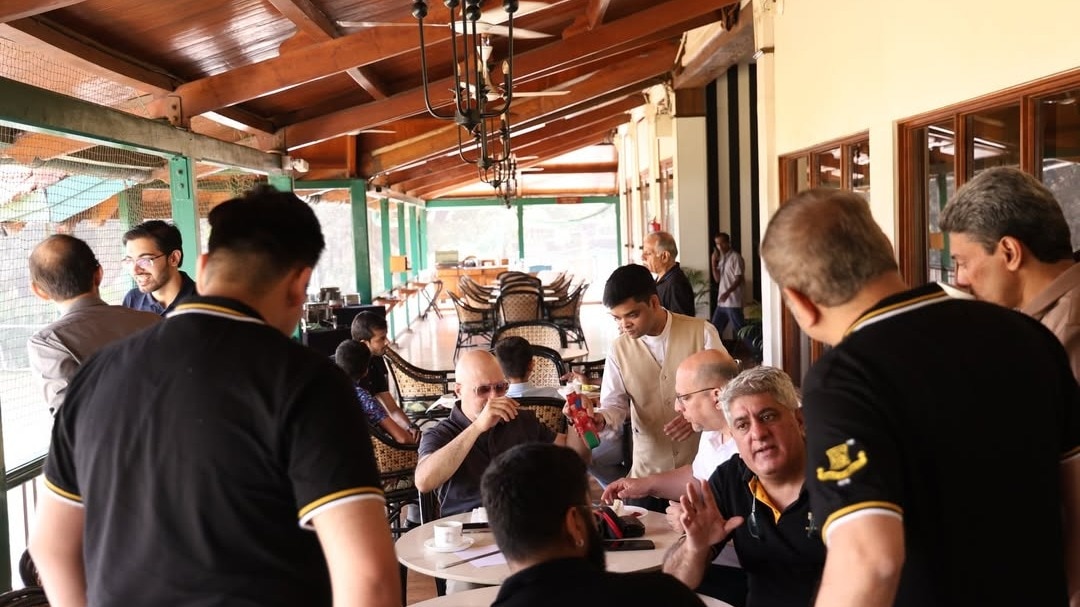
India's elite clubs have suddenly become a bit uncomfortable. There are questions being asked by both the government and those who denounce the "club culture", like, can institutions built on public land continue to enjoy extraordinary privileges in a country where every acre is under pressure? The debate has been ignited by the Delhi Gymkhana Club, one of the country's most exclusive social institutions, after it received an eviction notice from the Union government in May.
The Land and Development Office asked the club to vacate its 27-acre premises by June 5, citing its use for defence infrastructure and other public purposes in the high-security zone just steps away from the Prime Minister's residence at 7, Lok Kalyan Marg.
Members of the Delhi Gymkhana Club swiftly challenged the order in the Delhi High Court. But the controversy has already sent ripples through elite clubs across the country. From Mumbai and Bengaluru to Chennai and even smaller cities like Varanasi, several prestigious gymkhanas and membership clubs occupy prime government-leased land in some of India's most valuable neighbourhoods.
In principle, there is nothing wrong with private clubs. They offer spaces for recreation, networking and community life. But when such institutions operate on publicly owned land at concessional rates, questions are bound to arise – about transparency, accountability and whether these arrangements continue to serve any public interest.
For instance, the Delhi Gymkhana Club sits on 27 acres of prime Lutyens' Delhi land, leased from the government at a nominal rent of Rs 1,000 a year. Yes, Rs 1,000 a year for 27 acres. Not just that, the club has also drawn attention because of alleged mismanagement and opaque membership procedure.
The Delhi Gymkhana dispute has brought those questions into focus, and elite clubs and gymkhanas across India are sweating over the possibility that the easy access and privileges they have long enjoyed could be snatched away. Privilege, after all, is a difficult thing to give up once one gets used to it.
Even the Delhi Golf Club, spread across nearly 170 acres of government-leased land in the heart of the capital, has come under the scrutiny of the Supreme Court. Although its lease runs until 2050, people have questioned why such a large parcel of prime public land is being used mainly for the benefit of a small, privileged group, while generating relatively little revenue for the government.
The club also houses several heritage monuments, including some under the Archaeological Survey of India, all of which remain inaccessible to the public.
Here is a closer look at similar clubs across India and how, and their actions after the Delhi Gymkhana row.
MUMBAI'S LEGACY CLUBS ON MARINE DRIVE UNDER SCRUTINY
Days after the Delhi Gymkhana eviction order, several elite clubs along Mumbai's Marine Drive and Marine Lines belt received communications from the Collector's office.
Club representatives were invited to a meeting on May 29 (Friday) at the Old Customs House in Fort to discuss a proposed state gymkhana policy. The exercise was described as a routine review by a committee headed by the Konkan divisional commissioner to examine existing issues and suggest changes.
Even so, many clubs have already begun reviewing and organising their lease records and other documents in place.
The Mumbai clubs' main concerns are annual lease rent hikes of around 4%, high stamp duty charges for lease renewals — which could be about Rs 4 crore for a 30-year lease; restrictions on hosting weddings and other events that have been in place since the Covid pandemic, and limits on using remaining Floor Space Index (FSI) because of physical constraints such as the sea and railway tracks. Floor Space Index is the amount of construction permitted on a plot of land under local building regulations.
A 4% annual compound increase in lease rent might seem small each year, but over time it escalates the clubs' recurring expenses, roughly doubling the rent amount every 18 years, especially when maintenance costs for heritage structures and grounds are also quite high. Many of Mumbai's gymkhanas, particularly those along Marine Drive and near Oval Maidan, are protected local heritage structures and are situated within or immediately adjacent to the UNESCO World Heritage Site — the Victorian Gothic and Art Deco Ensembles of the city.
Meanwhile, the Rs 4 crore stamp duty charge for renewing a 30-year lease is a heavy one-time financial burden, particularly since nearly 90% of the leased land is open ground and only about 10% is built-up.
Representatives of several clubs, including Parsi, Hindu, Islam, Catholic and Police gymkhanas, met at Islam Gymkhana on Friday to prepare a joint strategy for these concerns.
Mumbai has a large network of such institutions, many of them rooted in community identities. The Bombay Gymkhana, founded in 1875, remains a major cricket and rugby venue. Nearby are the Parsi Gymkhana, Hindu Gymkhana and Islam Gymkhana, all of which played an important role in the development of cricket in the city. Other prominent institutions include the Catholic Gymkhana, Princess Victoria Mary Gymkhana, Jain Gymkhana and Grant Medical College Association.
Over the years, these clubs have evolved from sporting venues into influential social spaces.
While none of them face an immediate threat, the timing of the policy review, coming soon after the Delhi Gymkhana controversy, has triggered quiet concern in South Mumbai's club circles.
One club, however, has attracted particular scrutiny. Mumbai's Breach Candy Club, which reportedly occupies prime government-owned land, is still governed by a Europeans-only trust structure. The club is also known for a racial incident in the 1960s when a Shashi Tharoor, then a schoolboy, was thrown out because Indians were not permitted entry at the time.
ECHOES IN OTHER METROS, SMALL TOWNS TOO
Delhi and Mumbai are dominating the conversation at the moment, but elite clubs are pretty much woven into the fabric of metros across India.
In Hyderabad, the historic Nizam Club, founded in 1884 by Nawab Mahbub Ali Khan, and the Hyderabad Gymkhana continue to serve as elite social hubs.
Bengaluru's Bangalore Club, established in 1868, occupies 15 acres of green space in the heart of the city and counts business leaders and professionals among its members.
In Chennai, the historic Madras Club, founded in 1832 and later merged with the Adyar Club, continues to uphold traditions of exclusivity, leisure and networking that have endured for generations.
While there are no reports of similar action or unease in these clubs' circuit yet, a member of the Bowring Institute, Bengaluru, Prakash Gowda, told India Today Digital that the Delhi Gymkhana episode has sparked conversations among members about the future of elite clubs occupying prime public land. Also founded in the same year as Bangalore Club (1868), the Bowring Institute is also one of Bengaluru's oldest and most prestigious clubs.
Meanwhile, the Delhi Gymkhana episode could influence conversations around elite clubs in smaller cities as well.
Varanasi's historic Benares Club, another colonial-era institution that was built 128 years ago, has faced periodic disputes over land and public-use claims. In 2011, local authorities ordered the club to vacate possession of two disputed plots within its premises. In recent years, lawyers' groups in Varanasi have also demanded that land around the club be made available for the expansion of the district court complex, arguing that the existing judicial infrastructure faces severe space constraints.
These cases point towards a pattern. Clubs that once served colonial administrators and Indian elites now operate in a democratic India where public land accountability matters more.
CAN THERE BE A BALANCE IN HERITAGE AND PUBLIC GOOD?
Clubs worldwide, from London's gentlemen's clubs to New York's social institutions, have long existed as private spaces.
In India, they played roles in sports development. Think cricket's early nurturing in Mumbai gymkhanas. They do offer respite in crowded metros of cities. Many run efficiently, maintain heritage structures, and host events that benefit members and, indirectly, local economies.
Many clubs generate economic activity beyond their membership base. They employ large staffs, local vendors for food and beverages, coaches and sports professionals, and host events that create business for a range of service providers.
But scrutiny is necessary.
When clubs occupy government land at concessional or token rents, questions about transparency in membership, financial management and commercial activities naturally arise.
The Delhi Gymkhana case has brought many of these issues into focus. The government has claimed that the club owes around Rs 48 crore in dues following a rent revision. Questions have also been raised about governance and spending priorities, with allegations that more money was spent on wine and cigarettes than on sports-related activities.
Mumbai clubs, meanwhile, seemingly have the argument that steep maintenance expenses for old heritage buildings and large open grounds make the current lease terms unsustainable.
Historian Swapna Liddle has argued that while cultural institutions must evolve with the times, they should not be destroyed outright. Former IPS officer Kiran Bedi has also stressed that these spaces form part of India's sporting and institutional heritage and deserve thoughtful evolution rather than sudden erasure.
However, a push for accountability on subsidised public land seems only fair. There should be a good amount of gym, and not just khana, in the gymkhanas.
The Delhi Gymkhana Club order has got the other elite clubs sweating. The current wave of reviews could therefore open the door to meaningful reforms. For now, the gymkhana row has ignited a necessary national conversation about land, legacy, and privilege.
- Ends