
Air India’s four residential colonies spread across 184 acres in Kalina are set to pass into history as the last remaining residents vacate their homes. The colonies, whose earliest buildings date back to 1955, represented the airline’s final real-estate presence in Mumbai, the city where it was born (All image credits: Uma Kadam)
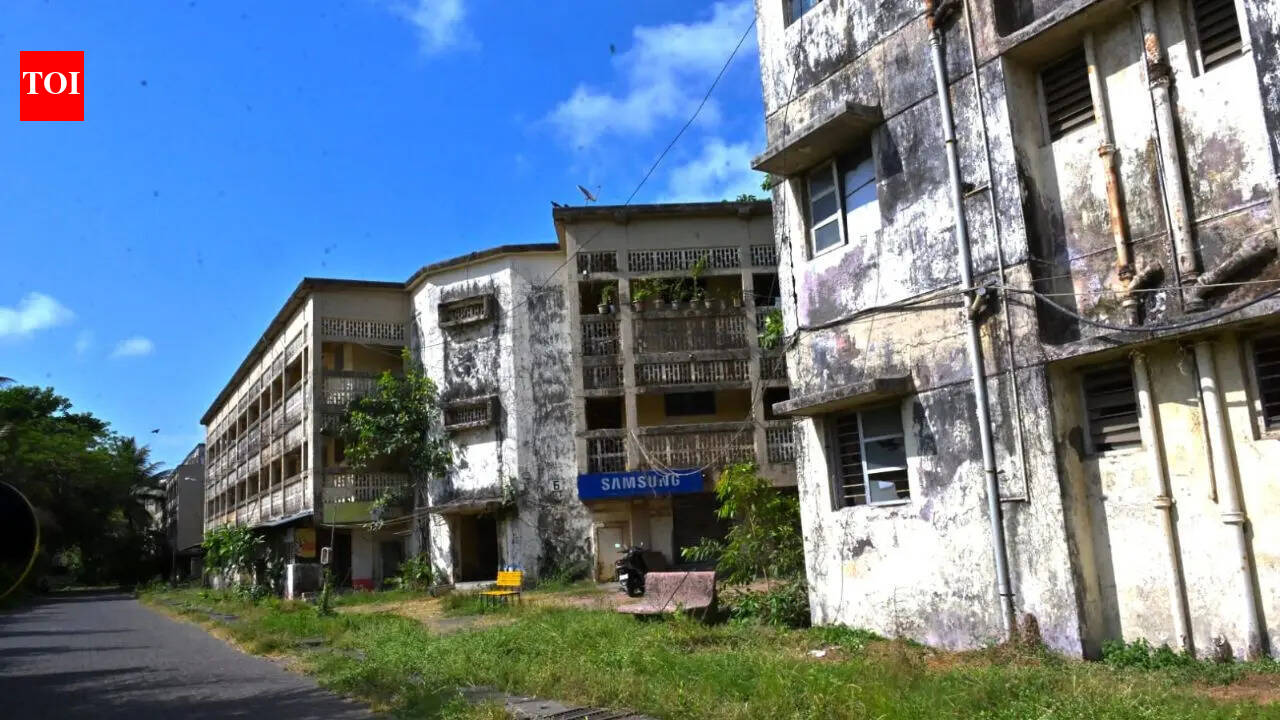
Air India’s four residential colonies spread across 184 acres in Kalina are set to pass into history as the last remaining residents vacate their homes. The colonies, whose earliest buildings date back to 1955, represented the airline’s final real-estate presence in Mumbai, the city where it was born (All image credits: Uma Kadam)
Now the four colonies with their 1,683 flats across 106 buildings have moved from govt-owned AI Asset Holdings Ltd (AIAHL) to MIAL. Though AIESL, AIASL and AIAHL are govt-owned entities and the airline Air India is now a private company, for the public at large, the colonies were associated with the brand Air India. The airline may still fly to Mumbai, but it no longer has a home here.
The Kalina colonies grew alongside Air India’s expansion in the second half of the 20th century. Starting with the first colony in 1955, three more were added by the 1980s, creating a vast residential network that housed generations of airline employees and their families.
The residential complex comprised 1,683 flats spread across 106 buildings. The properties have now moved from AI Asset Holdings Ltd to Mumbai International Airport Ltd, marking the end of a decades-long association between the housing colonies and the Air India brand.
A visit to the colonies revealed buildings showing signs of age, with damaged stairwells, exposed structures and debris. At the same time, the neighbourhood remained filled with greenery, with fruit-bearing trees and overgrown vegetation reflecting years of community life.
For many residents, leaving the colony means saying goodbye to decades of personal history. Several families spent over 30 years there, raising children and building lives around the community, making the move an emotional transition as they prepare for new homes elsewhere
The colony was more than a housing complex. It included schools serving around 3,000 students, a cricket ground that hosted coaching camps and women’s team practice sessions, and a football ground that nurtured players who went on to compete at higher levels.
The Kalina cricket ground played a role in developing notable cricketers including Prithvi Shaw, Yashasvi Jaiswal, Ajinkya Rahane and Shivam Dube. The sporting infrastructure within the colony became an important training space for aspiring athletes over the years.
The colony’s location near the airport proved significant during major disruptions. Residents working as engineers, loaders and technical staff were able to reach the airport on foot during periods when transport networks were affected, helping maintain critical aviation operations.
As the last families depart, the Kalina colonies leave behind a legacy of housing, education, sport and shared memories. For generations of Air India-linked employees, the neighbourhood was not just a place to live but a community that shaped daily life for decades.