
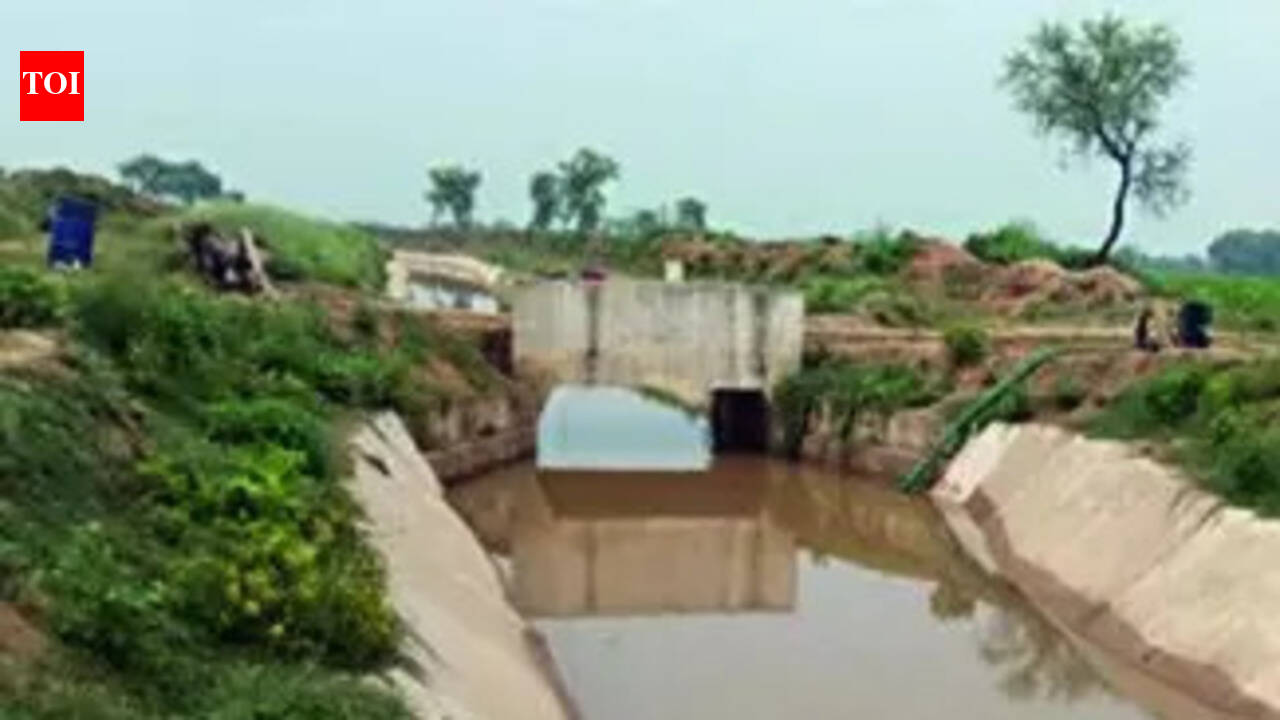
Gaya: North Koel Irrigation Project Faces Uncertainty
The North Koel irrigation project, aimed at providing assured irrigation to over 95,000 hectares of farmland in drought-prone areas of Aurangabad district, is facing an uncertain deadline. With less than two weeks left to meet the March 31 deadline, officials are racing against time to complete the project.
Land Acquisition Remains a Concern
Despite the Union and state governments closely monitoring the project, land acquisition remains a major concern. Only about 36 hectares of the required 41 hectares have been acquired so far, with over 10% of the land still pending. Issues related to the relocation of electric poles and shifting of transformers also remain unresolved.
Chief Secretary Directs Officials to Accelerate Progress
- Chief Secretary Pratyaya Amrit reviewed the project's progress through a video conference and directed officials to accelerate the pace of construction.
- Aurangabad DM Abhilasha Sharma and other officials are working to complete the project before the onset of the monsoon, tentatively scheduled for June 15.
- Farmer benefits from the project are expected in the coming Kharif season.
Project History and Cost
Launched in 1972, the project was initially estimated to cost Rs 30 crore. However, the cost has increased nearly hundredfold and is now pegged at Rs 2,430 crore. The project was halted in 1993 due to environmental concerns but was revived in 2017 after reducing the dam height.
Main Water Source and Government Monitoring
- The project's main water source is located in Jharkhand.
- The Prime Minister's Office is also closely monitoring the progress of the scheme.
The North Koel irrigation project has been delayed by more than four decades, and its completion remains uncertain. Officials are working to complete the project before the onset of the monsoon, which is tentatively scheduled for June 15.
Originally Estimated Cost: Rs 30 Crore
Current Estimated Cost: Rs 2,430 Crore
Project Timeline
- Launched in 1972
- Work halted in 1993 due to environmental concerns
- Revived in 2017 after reducing the dam height