
News News: As expectations rise ahead of the Union Budget 2026, the real estate industry is seeking urgent policy support to revive affordable housing and bolste.
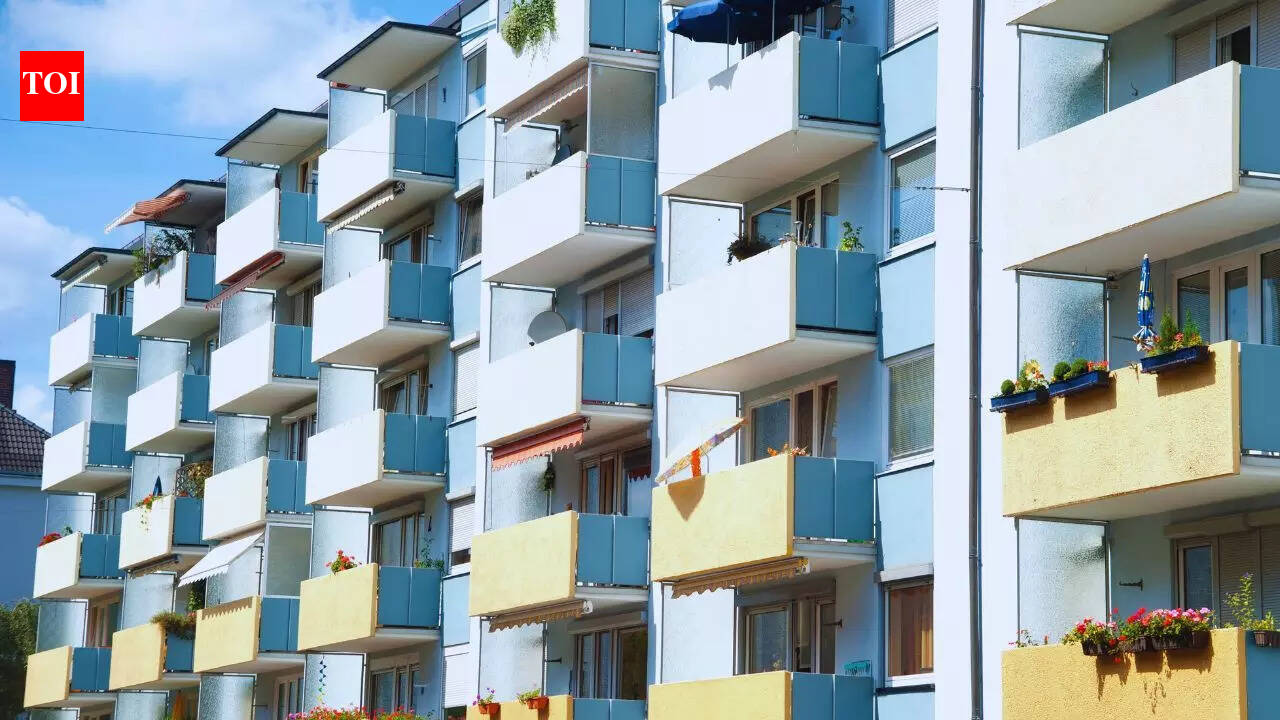
As expectations rise ahead of the Union Budget 2026, the real estate industry is seeking urgent policy support to revive affordable housing and bolster rental housing, cautioning that growth across the sector is becoming increasingly uneven. According to Anuj Puri, Chairman of ANAROCK Group, "India's housing story remains strong on the surface but is structurally imbalanced underneath." Puri added "In 2025, the new home sales volumes fell 14 per cent, yet the sale value rose 6 per cent to nearly 6 lakh crore. This clearly shows that luxury housing is thriving, while affordable housing is under stress" Puri said Budget 2026 must continue accelerating last-mile urban infrastructure, which would further boost real estate development. He also urged the government to reintroduce the 100 per cent tax holiday under Section 80-IBA, noting that the incentive had earlier played a key role in increasing affordable housing launches and developer participation. "We also feel that Budget 2026 should redefine affordable housing to reflect the market reality. A 45-lakh price cap no longer reflects real ground realities. Affordable housing threshold needs to be raised to at least 95 lakhs for Mumbai and 75 lakhs for other major cities whilst retaining the size norms". Niranjan Hiranandani, Chairman,NAREDCO (National Real Estate Development Council) stressed that rental housing must become a central pillar of the 'Housing for All' vision. He said "We strongly urge the removal of the stringent conditions under Section 80 IBA(6)(da) of the Finance Bill and recommend extending the benefit period for affordable rental housing projects to at least five years. Further, rental income from properties held as stock-in-trade should be exempt from taxation for five years after construction completion, recognising the long-term nature of these investments", he said. On taxation, Hiran said the current stamp duty mechanism based on circle or ready reckoner rates often overburdens buyers and sellers.He also flagged concerns over the disallowance of set-off of losses against income from house property, saying it discourages individual investment in rental assets. Anshuman Magazine, Chairman and CEO for India, South-East Asia, Middle East and Africa at CBRE, said Budget 2026 should deepen housing affordability while boosting consumption. He said "Strengthening rental housing policies and providing clarity on the long-term framework for urban redevelopment may also help address supply gaps in high-density cities. Faster project approvals through single-window clearances, coupled with incentives for sustainable and green construction, would improve project viability and investor confidence. Moreover, as more MNCs look at India as a GCC (Global Capability Center) hub, the government may also focus on skilling especially in fast-growing fields like AI and ML (Machine Learning). " According to Pyush Lohia, Director at Lohia Worldspace, policy stability, infrastructure-led capital expenditure, and continued personal income tax rationalisation would be crucial to support consumer confidence and long-term growth. He said "Continued rationalisation of personal income tax is expected to ease the burden on the middle class and boost disposable incomes. From a business standpoint, regulatory clarity and infrastructure-led capital expenditure, especially in urban development, logistics, and housing, will be crucial for driving employment and investment". He further added "Support for MSMEs through easier credit access and GST simplification will further strengthen economic momentum. Additionally, incentives for green construction, renewable energy, and water conservation can promote sustainable growth". Industry leaders said a balanced Union Budget 2026 that addresses the needs of affordable and rental housing could be critical to restoring broad-based growth in the real estate sector. With inputs from ANI
End of Article