
Dubai's economic landscape is tested after regional conflict. Aviation, hotels, and real estate see impacts. Luxury retail also faces pressure. The city's recovery hinges on geopolitical stability and traveler confidence. Dubai's long-term fundamentals remain strong, but cautious resilience guides its path forward.
Synopsis
Dubai's economic landscape is tested after regional conflict. Aviation, hotels, and real estate see impacts. Luxury retail also faces pressure. The city's recovery hinges on geopolitical stability and traveler confidence. Dubai's long-term fundamentals remain strong, but cautious resilience guides its path forward.
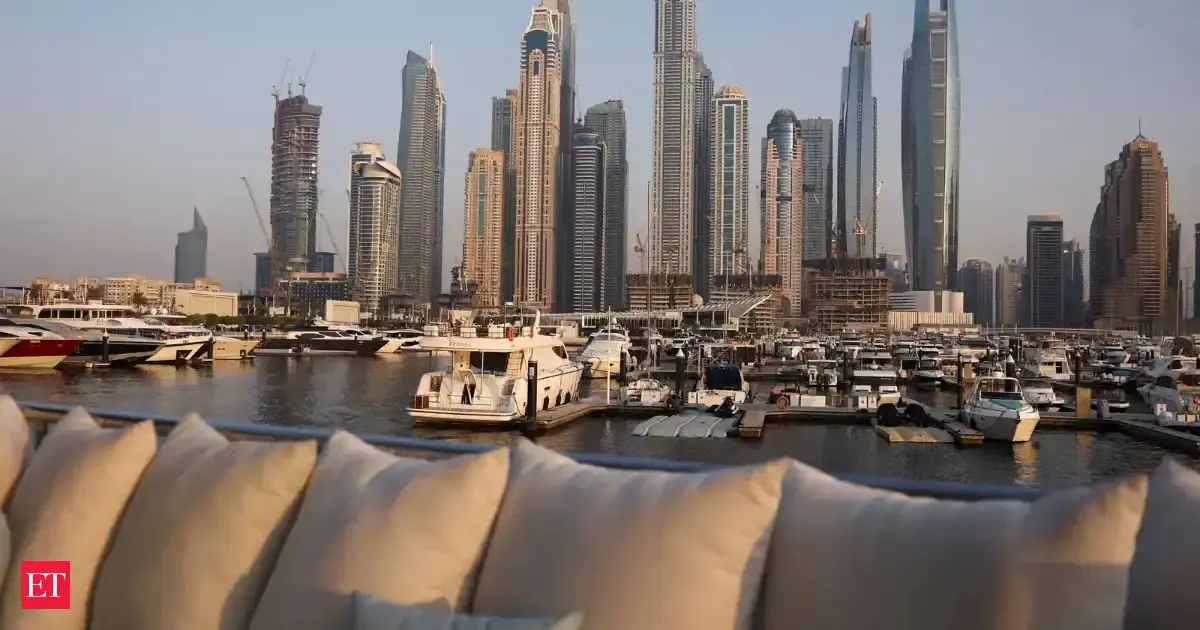
For years, Dubai thrived on a promise that nothing was beyond reach, a city where ambition rose as fast as the skyline and luxury became a way of life. But when US and Israeli forces launched strikes on Iranian targets in late February 2026, the shockwaves spread far beyond the conflict zone. The fallout is now testing the emirate, the Middle East’s vibrant global hub, where business activity and daily life — from aviation and tourism to airports, hotels, and real estate, are facing one of their toughest economic tests in generations.
The sky goes silent, then slowly recovers
The aviation industry was the first to take the hit. According to a Reuters report, Dubai International Airport (DXB), which is the world’s busiest international hub, handled just 18.6 million passengers in the first quarter of 2026, down from 23.4 million in the same period last year. March alone saw a drop of 66%. The airport’s ambition of breaking the "golden 100 million passenger mark" in 2026 — a target it was confidently tracking as recently as February 11 — has been formally deferred to 2027, CEO Paul Griffiths was quoted by Bloomberg as saying.
The structural damage has been quite significant. According to Bloomberg reports, of the 90 airlines that operated at Dubai International Airport (DXB) before the conflict, only 51 have resumed flights. The missing carriers, which are predominantly from Western Europe and the US, are still unable to secure insurance cover under active government travel advisories. Emirates and Flydubai, which are the biggest carriers, cancelled thousands of flights over two months.
Also Read: West Asia war pushes half of Dubai's 2026 property handovers to 2027
But not everything is gloom and doom. There are early signs of recovery. As reported by Reuters, the UAE’s aviation authority confirmed on May 3 that airspace had returned to fully normal operations, with precautionary measures first introduced on February 28 now lifted. Griffiths mentioned in a LinkedIn post that despite that disruption, both Dubai International and Al Maktoum International airports had collectively handled more than six million passengers, over 32,000 aircraft movements and more than 213,000 metric tonnes of cargo since the war began. "DXB is well positioned to progressively increase capacity and support airlines and guests through a period of continued adjustment," he says.
Live Events
Nishant Pitti, Founder & Chairman of EaseMyTrip.com mentions, “Recovery timelines will largely depend on how the broader geopolitical situation evolves and how quickly traveller confidence stabilises. Institutional coordination around aviation operations, tourism communication, and traveller reassurance will play a critical role in sustaining recovery momentum.”
But whether this crisis has exposed any long-term vulnerability in Dubai’s aviation model, Pitti says, “What this situation reinforces is the importance of diversification, operational agility, and strong crisis-response mechanisms. Dubai continues to remain strategically important within the global aviation ecosystem, but traveller confidence will always remain closely linked to regional stability.”
Hotels: The occupancy tells the real story
The hospitality sector was equally battered by the unrest. According to Anuj Kejriwal, CEO EMEA at ANAROCK Group, occupancy at what had been a high-performing sector averaging 84% in the early weeks of 2026 plunged to 15-20% at many properties in mid-March, as reported by The Economic Times.
Some hotels even reported single-digit occupancy at the worst times of the crisis. Akshay Jayaprakasan, Associate Partner at Redseer Middle East, estimates a 37% reduction in tourist arrivals for the full year, according to The Economic Times report.
Yet beneath these alarming numbers, the hotel sector has been able to portray a quiet act of resilience. “The hospitality sector today is far more adaptive and data-driven compared to earlier disruption cycles,” said Pitti. Hotels are deploying flexible pricing strategies, value-added packages, and shorter booking windows to sustain occupancy levels amid uncertainty, he added.
According to RateGain's analysis of Dubai hotel booking data for April, active booking rates remained broadly stable through the month, changing from AED 137.28 in the first two weeks to AED 135.54 in the third and fourth weeks, a marginal 1.3% decline, as per The Economic Times report.
Also Read: Dubai issues over 167,000 Golden Visas to families of skilled professionals
The more telling metric is RevPAR, an acronym for revenue per available room, which captures the occupancy factor better. RevPAR for Indian Hotels Company Limited (IHCL), which operates three properties in Dubai, moved from AED 93.5 in the first two weeks of April to AED 157.34 in the third and fourth weeks, a 68% jump.This jump was primarily driven by a 56% increase in weekday occupancy and a 76% surge in weekend occupancy, as per The Economic Times report.
The staycation pivot has been central to this partial recovery. With UAE residents unable to travel abroad, hotels are targeting the domestic market with aggressive resident promotions to convert a crisis into an opportunity. The ongoing nine day Eid al-Adha is expected to extend this momentum. According to The Economic Times report, top hotels are expecting 90-100% occupancy during this period. Anurag Jain, EVP, APMEA, at RateGain mentions booking value has risen by close to 39%, alongside an almost 9% increase in average daily room rates.
Hotels occupany drop vs recovery
“There is also a stronger focus on experiential offerings and bundled travel experiences to maintain occupancy momentum,” Pitti said, indicating that the sector is attempting to shift consumer spending toward curated and premium experiences rather than purely transactional stays.
Pitti noted that within the broader travel ecosystem, some segments are proving more resilient than others. Business travel and VFR (visiting friends and relatives) traffic continue to hold up relatively well, driven largely by necessity rather than discretionary spending patterns. Short-haul leisure travel and premium experiential tourism are also witnessing steadier demand compared to long-haul international travel, which remains more vulnerable to geopolitical uncertainty and fluctuating consumer confidence.
Also Read: GIFT City vs Dubai vs Singapore: What you need to know while choosing your investment hub
To reinforce the recovery at the structural level, the Dubai government announced an AED 1.5 billion support package, suspending the 7% municipal fee on hotel rooms and restaurants, exempting the Tourism Dirham, a tourism fee charged to guests staying in hotels and holiday homes by the tourism authority, and waiving off event related charges.
Real Estate: Interrupted but the towers still rise
Dubai’s property market entered 2026 with a strong momentum but has slowed considerably amid the West Asia conflict, though recent data suggests the pace of decline may be easing.
According to ValuStrat’s April 2026 data, citywide residential capital values (VPI) declined to 224.9 points, reflecting a softer monthly drop of 1.9% compared to March’s 5.9% contraction, while annual growth remained positive at 5.3%. Ready home transactions experienced a significant slowdown, declining 4.2% monthly and recording a sharp annual drop of 43.8%, highlighting weaker investor sentiment.
Ankur Aggarwal, Chairman & Co-Founder, BNW Developments says, “I would describe the shift as caution, not exit. What we are seeing is a repricing of risk. Speculative capital has become quieter. Long-term capital is still present, especially in prime, branded, and well-located assets.”
Despite the broader pullback, demand in the ultra-prime segment has remained resilient, with AED 30 million-plus deals continuing in areas such as Palm Jumeirah and Dubai Hills Estate, as noted in the ValuStrat article.
The construction sector is facing disruptions with nearly half of the 45,000 residential units targeted for delivery in 2026 now expected to be delayed to 2027 or later because of rising material costs, according to an Economic Times report. Indian investors, traditionally big investors in Dubai’s real estate markets, are turning cautious with some shifting attention back to domestic markets.
“There are risks if the conflict stretches further, especially around logistics, material costs, and cash collections. But construction activity has not stopped across the market”, says Aggarwal.
Luxury Retail: Are malls losing their sparkle?
Luxury retail, another pillar of Dubai’s consumption-driven economy, has also come under pressure as the conflict disrupted high-spending tourist flows and weakened footfall across malls.
According to a Reuters report from April, French luxury giant LVMH, which owns brands such as Louis Vuitton, Dior, Bulgari and Tiffany & Co., said the military conflict had a negative impact of around 1% on total group sales, even before accounting for indirect effects such as weaker global tourism demand. The company said mall traffic across the Gulf had fallen sharply. Additionally Reuters reported that sales in Dubai malls dropped by as much as 50% since the start of the war. The conflict also impacted demand in Europe, where sales fell 3%, largely due to the war and the strengthening euro.
Europe’s 10 listed luxury companies have collectively lost nearly $176 billion in market value since the beginning of the year, according to Bloomberg’s data. Investor concerns have deepened globally, with luxury stocks including LVMH, Kering and Hermes witnessing sharp corrections as fears grow that the West Asia conflict could delay the sector’s long-awaited recovery.
Luxury sector
Kering reported a 11% drop in Middle East retail sales and weaker tourist spending in Western Europe. Analysts say the conflict has delayed hopes of a broader luxury revival. “If it now turns out that whatever luxury recovery we were hoping for in 2026 is not going to happen. I don't think anybody can be surprised by it,” Christopher Rossbach, portfolio manager at J Stern & Co told Reuters.
Can Dubai hold its ground?
As Dubai navigates the economic aftershocks of the West Asia conflict, analysts believe the city’s long-term fundamentals remain intact, even as recovery timelines stay tied to geopolitical stability and consumer confidence.
“Travel demand recovery in markets like Dubai is usually closely linked to geopolitical stability and overall consumer confidence,” says Pitti. He noted that the emirate continues to benefit from strong tourism infrastructure, aviation connectivity, and repeat demand from key source markets such as India and the Gulf Cooperation Council (GCC), although “booking sentiment is naturally becoming more measured in the current environment.”
A similar sense of cautious resilience is visible in the real estate market as well. “Dubai’s safe-haven appeal remains intact, but investors are reading it more carefully now,” says Aggarwal.
For a city built on ambition and reinvention, Dubai’s latest challenge may ultimately test not just the strength of its economy, but the resilience of the global confidence that has long powered its rise.
(You can now subscribe to our Economic Times WhatsApp channel)